

If you spend a lot of time on a motorcycle, you probably know the feeling. You set off early in the morning towards the Eifel in fog and cold, with the temperature barely reaching 8 degrees. A few hours later, you are riding along the Rursee and suddenly it feels as though summer has arrived. Sun on your visor, temperatures climbing and your jacket partly open at the next stop.
That is exactly why riding in layers works so well. The weather rarely stays the same throughout a ride, and neither does your body temperature. One moment you are cold, the next you are warm, and if you are unlucky, rain gets added to the mix. You do not want to be stuck wearing one heavy jacket or find yourself dressed too lightly. You want to be able to adjust.
A good layering system helps you do exactly that. Not only for comfort, but for concentration as well. Once you become too cold, too hot or too wet, it affects the way you ride. You get tired more quickly, lose focus and simply enjoy the ride less. On a motorcycle, you notice that immediately.
Why layering works so well on a motorcycle
Whether you are taking a multi-day motorcycle trip through the Swiss Alps or simply planning a quick Sunday morning ride along Dutch country roads, layers always work. The advantage of a layering system is that every layer has its own job. The layer against your skin moves moisture away from your body. The layer above it retains warmth. And your outer layer protects you from wind, rain and, of course, the road if things go wrong.
It sounds simple, but many motorcyclists still make the same mistake: wearing several thick pieces of clothing and hoping that will keep them warm enough. The problem is that you often end up feeling bulky, start sweating and simply become less comfortable on the bike. Combining a few smart layers almost always works better than dressing as though you are heading to the North Pole.
If you are heading away for a few days, our motorcycle weekend packing list is also useful for making sure you do not forget everything else you need alongside your riding gear.
How do you build a good motorcycle layering system?

1. The base layer: directly against your skin
The base layer may not be the most exciting part of your outfit, but it is one of the most important. This is the layer you wear directly against your skin, and it has a major influence on how comfortable your ride feels.
The most important rule here: avoid cotton. Seriously. A regular cotton T-shirt may seem perfectly fine, but once you start sweating, it stays wet. Add cold air flowing over it while you ride and your body can cool down surprisingly quickly. That leaves you with the unpleasant cold and clammy feeling that can make a ride miserable.
What you want instead is technical base clothing or merino wool. Merino wool in particular works very well for many motorcyclists. It wicks moisture away effectively, feels comfortable, does not start smelling as quickly and performs surprisingly well in both colder and warmer conditions. As long as it fits closely without restricting movement, you are usually good to go. We used these merino shirts during our trip to Norway and were very happy with them.
2. The midlayer: warmth without the bulk
Next comes the midlayer. This is essentially the layer that determines how much warmth you retain. Think of it as the thermostat of your motorcycle outfit.
What you generally do not want is a thick, heavy sweater squeezed underneath your motorcycle jacket and restricting your movement. It may feel warm while you are standing still, but on the bike it quickly becomes uncomfortable. A thin fleece, lightweight midlayer or compact down jacket usually works much better. Warm enough, without all the bulk.
A good midlayer is especially useful when riding in the mountains or during spring and autumn. Put it on during a cold morning, and once the temperature rises in the afternoon, simply pack it back into your tank bag or pannier. That is exactly the advantage of riding in layers: you can adapt along the way without much hassle.
3. The outer layer: protection from crashes and weather
Your outer layer consists of your motorcycle jacket and trousers. First and foremost, they need to protect you. Look for abrasion-resistant materials, proper protectors and clothing that fits correctly without flapping around in the wind.
But your outer layer does more than protect you in a crash. It also blocks the wind, keeps rain out and largely determines how versatile your entire riding outfit is.
Broadly speaking, there are three main options.
Laminated motorcycle clothing is ideal if you ride regularly and do not want to think about adding another layer as soon as it starts raining. The waterproof membrane is bonded directly to the outer material, which means the fabric absorbs less water. It is especially useful if you regularly keep riding through bad weather.
Motorcycle clothing with a removable waterproof membrane is often more affordable and flexible. The downside is that the outer fabric can still become soaked and heavy during persistent rain. It works perfectly well, but it is slightly less convenient when travelling.
Mesh motorcycle clothing is excellent in summer. It is light, airy and offers plenty of ventilation in hot weather. The trade-off is that you will need to bring an extra layer for rain or colder conditions, such as a compact rain jacket or windproof layer.
Clothing is important, but there are plenty of other items that can make a motorcycle trip more comfortable as well.
What works in practice when riding in cold weather?
Cold weather on a motorcycle is not just about the temperature. Wind chill plays a huge role. Ten degrees Celsius may feel perfectly manageable when you are standing outside, but once you are riding at speed, it suddenly feels much less comfortable.
That is why two things matter most in colder conditions: a good base layer and an outer layer that genuinely keeps the wind out. If cold air can easily pass through your clothing, adding another thick sweater is not going to solve the real problem.
Do not underestimate your hands, neck and head either. Keeping those areas comfortable can make a huge difference. A good neck warmer or buff, a windproof balaclava or helmet liner and proper gloves often help more than squeezing another sweater underneath your jacket. Heated grips or heated gloves are not excessive if you regularly ride in colder weather either. Cold fingers mean less feel and less control, and that is something you definitely want to avoid.
What about riding in the rain?
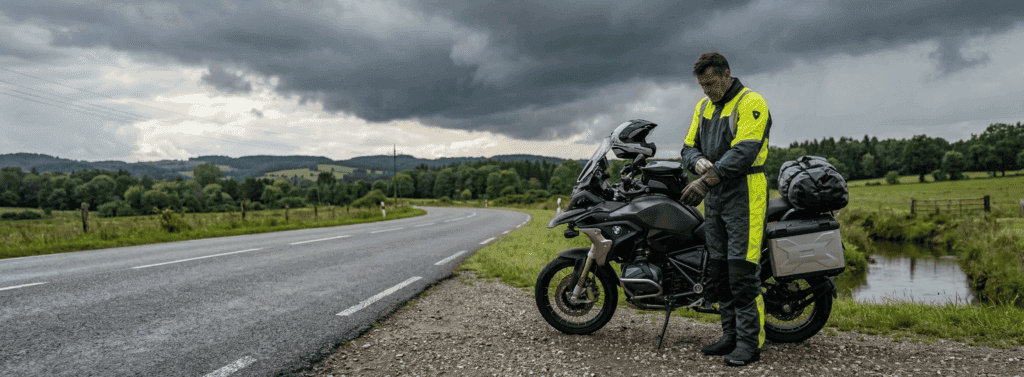
When it rains, you basically want one thing: to stay dry. From the outside, but also from the inside. After all, getting soaked in your own sweat is not much better.
That is exactly why breathable layers are so important. You can have the best waterproof outer layer in the world, but if everything underneath it becomes hot and clammy, you will still feel uncomfortable.
The best advice is actually very simple: put your waterproof gear on before the rain really starts. Do not wait until you are already soaked or standing beside the road trying to pull waterproof trousers over your boots while the rain is pouring down. As soon as you see the sky darkening and feel the weather starting to change: stop, put your rain gear on and continue.
Pay attention to your gloves and sleeves as well. If water starts running down your wrists and into your gloves or jacket, you are still going to get wet. It is a small detail that often makes a bigger difference than people expect.
Having the right motorcycle clothing is one part of being prepared. A few useful motorcycle apps can make life on the road considerably easier as well.
What should you wear when riding in hot weather?
Many riders make the same mistake in summer: wearing as little as possible because it is hot. It sounds logical, but on a motorcycle it can actually work against you.
Riding in just a T-shirt is not only unsafe, but hot air rushing past your body can also dehydrate you faster than you realise. That can leave you feeling sluggish and less focused, which is exactly what you do not want while riding.
A better solution is a thin moisture-wicking base layer underneath a good mesh jacket or well-ventilated motorcycle jacket. That keeps the air moving while still giving you proper protection. And, of course, drink enough water. Once temperatures climb above 25 or 30 degrees Celsius, hydration is something you need to actively think about. A cooling vest can also make a surprisingly big difference, especially on longer rides.
Use your stops to adjust your layers
Knowing what to wear is one thing. Knowing when to change your setup is just as important.
Many motorcyclists keep riding for too long even though they can already feel that they are too hot or too cold. Yet a short stop is often all it takes to become comfortable again. Open your jacket, add a layer, remove one or put on your waterproof gear. A small effort can make a huge difference.
And those stops are simply part of a good ride anyway. Pull over at a viewpoint, grab a coffee at a petrol station or motorcycle café, warm up your hands or drink some water. If you plan it well, changing a layer does not become an inconvenience. It simply becomes part of your day.
Which seasons are best for a motorcycle layering system?
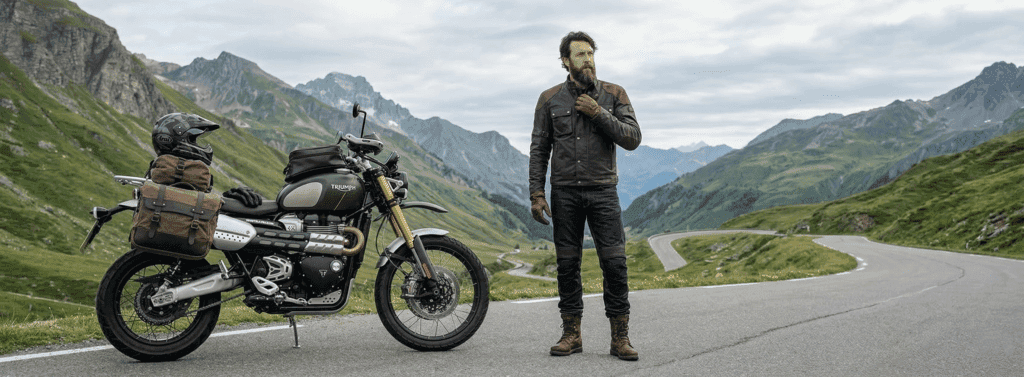
In reality, a layering system works throughout the year, but you notice its advantages most clearly in spring and autumn. You often leave in cold conditions in the morning and suddenly find yourself riding in sunshine later in the day. Without layers, you either start the day too cold or finish it much too warm.
It remains useful in summer too, particularly if you ride in areas with large elevation changes. It may be hot in the valleys while mountain passes or higher roads are considerably cooler. Temperatures can also drop quickly later in the evening. In those situations, having an extra layer available is very useful.
In winter, quality becomes more important than quantity. You do not want to end up wearing five thick layers and barely being able to move. Fewer layers, chosen properly, usually work better. Good thermal clothing, windproof gear and possibly heated motorcycle clothing can make all the difference.
Good clothing is only one part of preparing for a motorcycle trip, but it is a very important one.
Conclusion
Layered motorcycle clothing is not an unnecessary luxury. It is simply one of the smartest ways to stay comfortable, safe and relaxed when the weather changes during your ride.
Start with a good base layer, add a comfortable midlayer for warmth and make sure your outer layer protects you against wind, rain and everything else you may encounter on the road. That gives you far more flexibility and simply makes riding more enjoyable.
Most importantly, experiment with what works for you. There is no single combination that is perfect for every rider. But once you find a layering system that works well, you probably will not want to go back.
Ride safe and stay comfortable.