
MotorMakkers Tool
MM FlowIndex
Discover how a GPX route is likely to feel on the motorcycle. MM FlowIndex analyses corners, flow and elevation gain and shows you on the map where the character of your route is created.
These scores only indicate how the route is likely to ride on the motorcycle. They say nothing about scenery, atmosphere, stops or your personal preferences along the way.
What does FlowIndex do?
From GPX file to riding character
Two routes of the same length can feel completely different on a motorcycle. One may consist of long straight sections and lots of built-up areas, while the other offers continuous corners, elevation changes and a pleasant riding rhythm.
MM FlowIndex aims to make that difference visible.
Your GPX route is analysed using three main components:
Corners, Flow and Elevation.
You can also see on the map where important route characteristics were detected, such as enjoyable corners, hairpins and sections through towns or cities.
The overall score
What does the MM FlowIndex score mean?
MM FlowIndex combines the most important characteristics of a motorcycle route into a single score from 0 to 100. It does not simply count the number of corners, but looks at the character of the route across its full distance.
How should you read the overall score?
A high score is mainly achieved when interesting sections are not only present, but also continue for sufficient distance and with enough continuity throughout the route.
For routes in the Netherlands, a FlowIndex of 30+ can already indicate a very enjoyable motorcycle route.
Three core parameters
What is FlowIndex made up of?
The new FlowIndex has deliberately been kept simpler. Three main parameters together determine the character of the route.
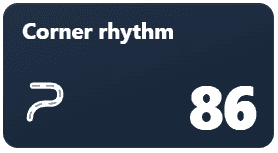
How much interesting cornering does the route contain?
The Corners parameter looks at actual cornering in the route. Not every small change of direction carries the same weight: more pronounced and sharper corners have more influence than gentle changes in direction.
The surrounding environment is also taken into account. Corners through towns and cities, for example, should not artificially inflate the score.

Does the route keep flowing naturally?
Flow is about the rhythm of the route. Enjoyable sequences of corners and interesting sections increase the sense of flow, while long straight sections and interruptions reduce that rhythm.
As a result, a route with many isolated corners can still score lower than a route where the cornering continues naturally for longer stretches.

How much climbing and descending does the route include?
Climbing and descending add extra character to a motorcycle route. FlowIndex therefore looks at the amount of elevation change accumulated throughout the route.
A flat route can still score very well thanks to strong corners and flow, but hilly and mountainous areas gain the extra dimension that is clearly noticeable while riding.
Map overlays
See where the route character is
The overall score tells you how enjoyable the route is likely to ride. The map overlays then show where the enjoyable corners and hairpins are, and where the route passes through built-up areas.
Corners
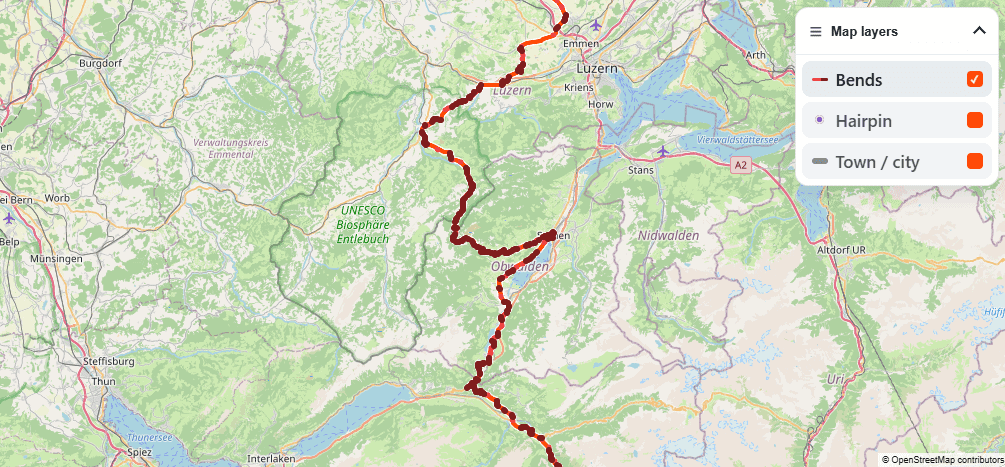
See directly on the route where relevant corners and twisty sections have been detected. This shows not only how many corners the route contains, but also how they are distributed across the ride.
Hairpin bends
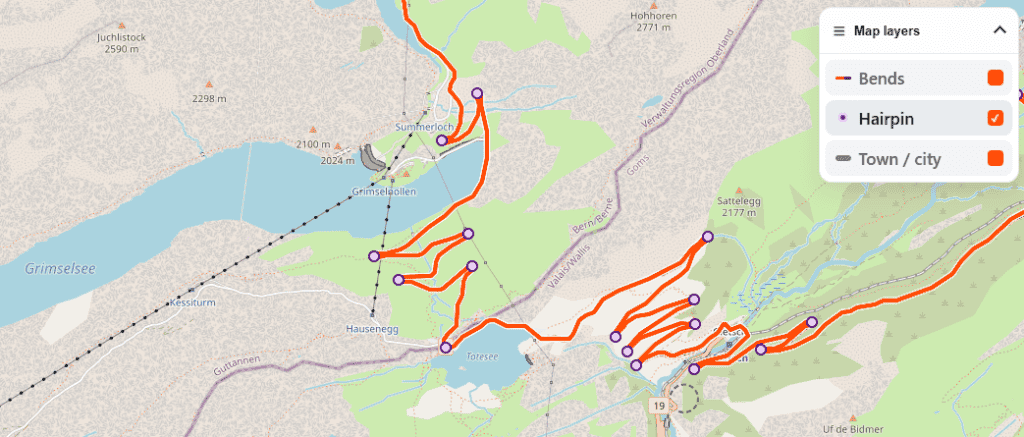
True hairpin bends are detected separately and shown on the map. Especially on mountain and pass routes, this gives extra insight into the technical character of the ride.
Built-up areas
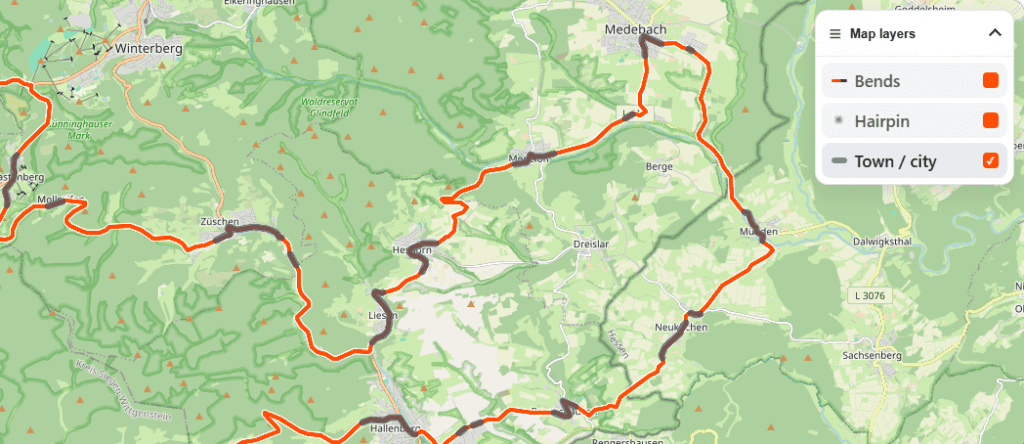
FlowIndex detects sections through built-up areas. This matters because a corner through a village does not offer the same riding experience as similar cornering on a road in open countryside. It also helps you estimate where riding speeds are likely to be significantly lower.
Additional route data
More context for your route

Alongside the three core parameters, FlowIndex shows additional route data. At a glance, you can see how many hairpins were detected, what percentage of the route runs through built-up areas, how much elevation change you encounter and the total distance.
Hairpin bends
The number of detected hairpin bends along the route. They provide a useful indication of the technical character of the ride and carry extra weight within the FlowIndex Corners score.Built-up areas
The percentage of the route that runs through physically detected built-up areas. This shows how much of your ride passes through towns and cities. Built-up sections interrupt the free-flowing riding rhythm and therefore mainly affect the Flow score.Elevation gain
The total amount of climbing and descending during the ride. A large amount of elevation change usually points to a hilly or mountainous route and adds extra variety and character to the ride.Min. elevation
The lowest point of the route above sea level. Together with the maximum elevation, this quickly shows the elevation range you will be riding in.Max. elevation
The highest point reached on the route. Especially on hilly and mountain routes, this gives extra context about the landscape and the type of roads you can expect.Distance
The total length of the analysed route. Distance helps put other figures, such as the number of hairpins and the amount of elevation change, into better perspective.The idea behind FlowIndex
A good motorcycle route is more than just lots of corners
The number of corners alone tells you very little. A hundred isolated corners spread across a long route can be less enjoyable than fifty corners that follow one another kilometre after kilometre.
That is why MM FlowIndex looks at the combination of corners, continuity and elevation change. Built-up areas and less interesting sections are taken into account, so the final score matches as closely as possible how the route is likely to feel on the motorcycle.
And thanks to the map overlays, you can not only view the score, but also see for yourself where the most interesting sections of your route are located.