
Germany region guide
Motorcycle Riding in the Eifel: The Ultimate Guide to Routes, Bends and Stops
For many Dutch motorcyclists, the Eifel is probably the area they keep coming back to. And that is no surprise. It is nicely close by, you reach the hills fairly quickly and the roads are more than varied enough to turn it into a brilliant day ride or a full motorcycle weekend. Motorcycle riding in Germany is simply fantastic.
For many Dutch motorcyclists, the Eifel is probably the area they keep coming back to. And that is no surprise. It is nicely close by, you reach the hills fairly quickly and the roads are more than varied enough to turn it into a brilliant day ride or a full motorcycle weekend. Motorcycle riding in Germany is simply fantastic.
Whether you feel like a day out on the bike or want to plan a complete motorcycle weekend, the Eifel almost never disappoints. You will find winding roads, beautiful views, charming villages and plenty of places to stop for coffee, lunch or just to take a photo. And all of that just a stone's throw away, if you throw hard enough.
The Eifel is a great area for different types of motorcyclists: riders who want to keep up the pace, riders who prefer relaxed touring and riders who simply want to enjoy the scenery.
Still deciding between the Eifel or Sauerland? This comparison will help you quickly choose which region best suits your ride.
Why the Eifel Is Such a Great Motorcycle Destination
The Eifel is surprisingly varied. From South Limburg you are quickly into the first enjoyable bends, but it is also perfectly manageable for a weekend from the rest of the Netherlands. That is what makes it so appealing: you do not first have to spend ages on the motorway before the fun begins. You can even consider riding the entire route from the Netherlands on back roads and avoiding motorways altogether.
What makes the Eifel so enjoyable is that the bends are accessible for almost every motorcyclist. In the Alps, for example, you are often really working with climbs, descents and tight hairpins, but in the Eifel everything is a little more flowing and forgiving. It is easier to settle into a nice rhythm, and that is exactly what makes it so addictive for many riders.
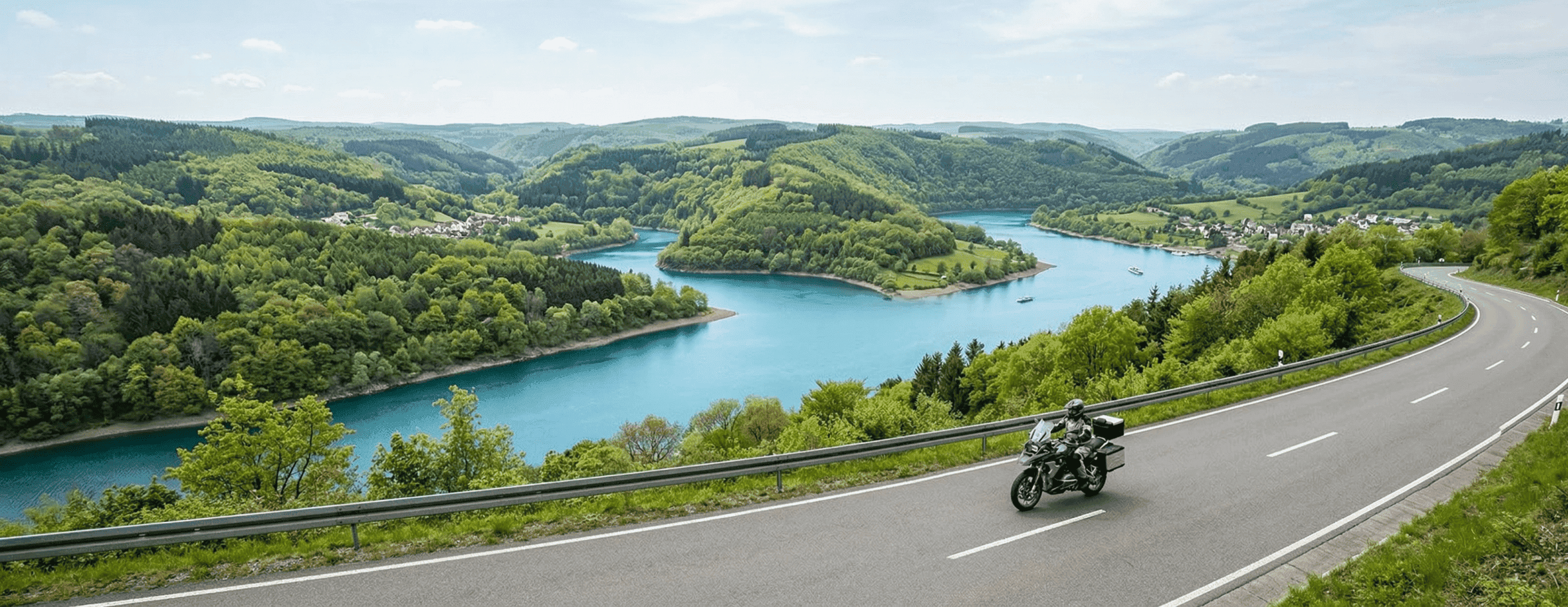
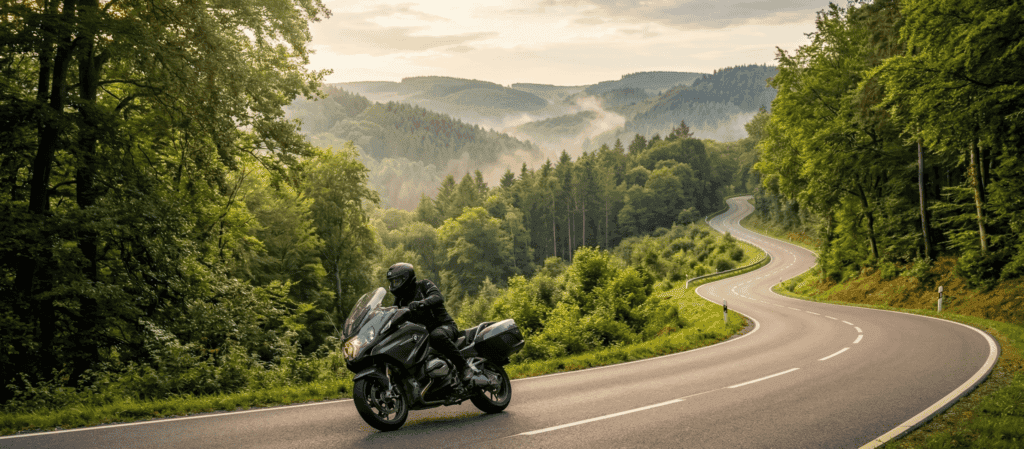
On top of that, the landscape changes just enough along the way. One moment you are riding through forests, a little later you are beside a lake, at a scenic viewpoint or in a small village. That keeps the Eifel from becoming monotonous.
If you are looking for a compact ride in the Eifel, motorcycle riding around Monschau is a great idea for a day trip or short weekend.
GPX Routes
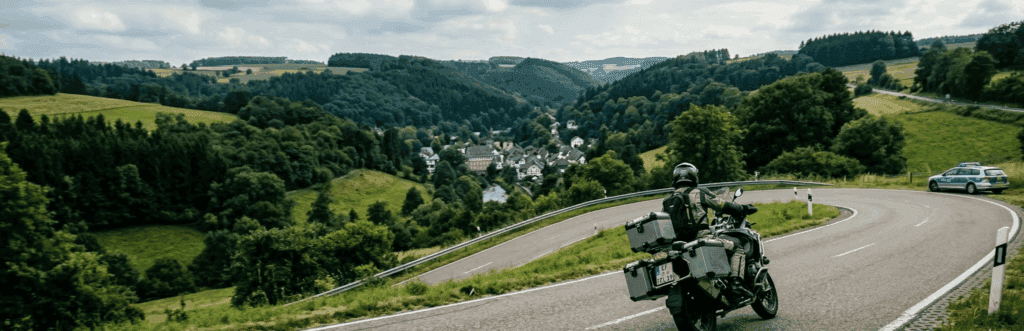
Want to know how a route rides, or what to expect in terms of technical sections and bends? Check the GPX FlowIndex analysis of a route.
More Inspiration
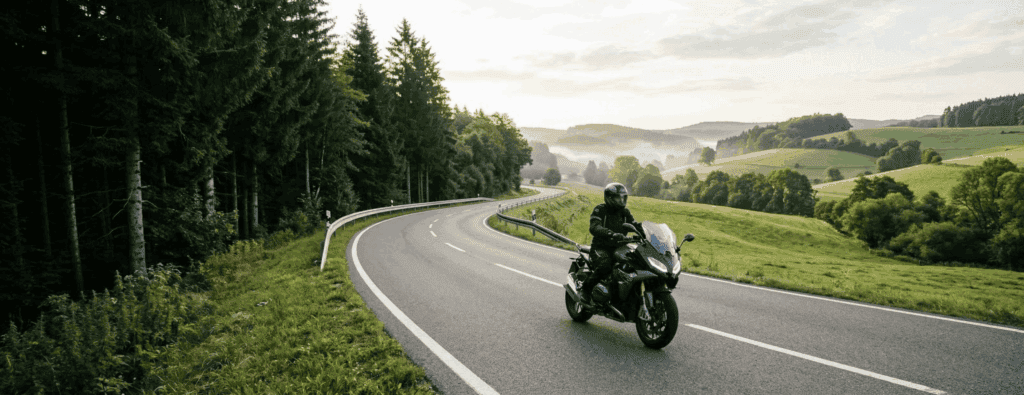
The Best Motorcycle Routes in the Eifel
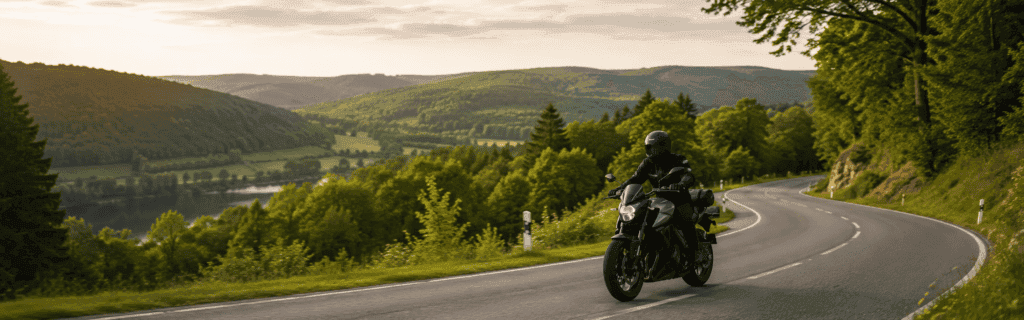
If you want to get the most out of a weekend, it helps to divide the region into smaller areas. Not that everything needs to be planned down to the last detail, but the different parts of the Eifel each have their own character. That makes it easier to choose a route that suits you. We have also put together an overview of the best motorcycle roads in the Eifel to include on your trip.
Around Monschau and Eifel National Park
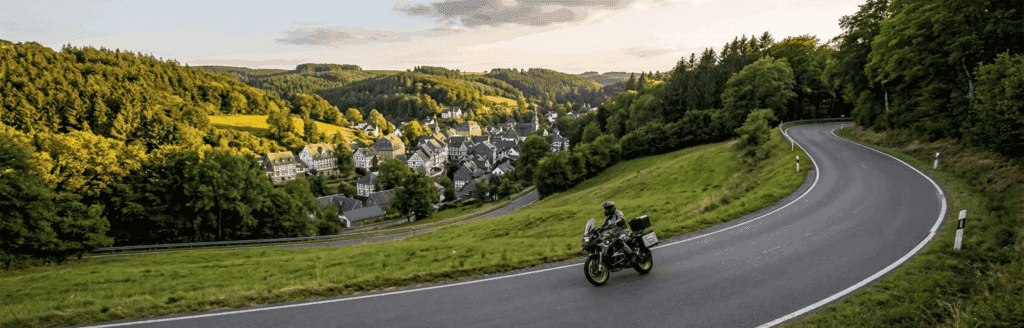
For many motorcyclists, this is a bit of a classic entry point. Monschau is quite touristy, but it is also atmospheric and beautiful. It is genuinely one of those towns where you feel as if you have stepped into another era, which makes it pretty special.
The roads in this part of the Eifel are often wooded, include more flowing bends and are often just a little cooler in summer than the more open sections farther on. That simply makes for pleasant riding. The L128 between Einruhr and Steckenborn is one of those roads you really should ride at least once.
It is also worth stopping at Vogelsang IP. Not only because of the history of the place, but also because you get a beautiful wide view of the surrounding area.
The Rursee and the North Eifel

The Rursee and Obersee create a completely different kind of setting. Here you ride along the water more often, which adds welcome variety. Especially on beautiful days, this is simply wonderful riding.
Good to know: it can be busier here at weekends. Not only with motorcyclists, but also with day trippers, cyclists and cars. During the week, riding here is much more relaxed and you can sometimes feel as if you almost have the area to yourself.
The Volcanic Eifel: Rougher and More Open

If you head farther south towards Daun and Gerolstein, the surroundings change quite noticeably. The landscape becomes more open and a little rougher. The well-known Maare, the volcanic crater lakes, give this part of the Eifel a character all of its own.
For many riders, this section feels a little faster because there are more enjoyable sweepers. If you like a slightly higher pace and less tourist traffic, you are usually in the right place here.
The Hohe Acht is a well-known name in this part of the region. As the highest point in the Eifel, it is a nice place to include anyway, and the view makes it genuinely worthwhile.
Combining the Eifel and the Moselle
If you want more variety in a single trip, combining the Eifel with the Moselle is basically a no-brainer. From the southern Eifel, it is fairly easy to ride towards the Moselle Valley, and then the landscape suddenly changes completely. Fewer dense forests, more open hillsides, vineyards and villages along the river.
That makes this combination extra enjoyable. The Eifel gives you the bends and the rhythm, while the Moselle adds views and a completely different atmosphere. Towards places like Cochem or Piesport, you get roads that are technically quite fun while also being very photogenic. For a long motorcycle weekend, this combination is highly recommended.
Practical Tips for Your Motorcycle Weekend
A motorcycle ride through the Eifel does not have to be complicated, but a little preparation certainly helps. Not because the area is difficult, but because weather, traffic and local rules can sometimes make the difference between a relaxed ride and unnecessary hassle. Especially if you are turning it into a multi-day trip, it helps to prepare your motorcycle trip properly.
Best Time to Travel

Broadly speaking, the motorcycle season in the Eifel runs from April through October. These are usually the months when the weather and riding conditions are at their best.
May and June are ideal for many motorcyclists. Everything is fresh and green, and the temperatures are usually comfortable enough for a full day of riding. September and October are also great months, especially if you like less traffic, beautiful autumn light and autumn colours. You do need to pay a little more attention in shaded bends, because leaves and moisture can create surprises more quickly there. In changeable weather conditions, the right gear for a motorcycle trip is far from a luxury.
Safety and Enforcement
Germany is usually very clear about the rules. In some parts of the Eifel, certain roads may be closed to motorcycles at weekends or at specific times. This mainly happens on popular sections where there has been a lot of nuisance in the past. Before you leave, always check which roads are closed to motorcycles in Germany.
Sound checks are also something to keep in mind. If you ride with an illegal exhaust or without a dB killer, you are more or less asking for trouble. If your exhaust is on the louder side, it is smart to first read how dB limits for motorcycles in the Eifel work.
In general, the asphalt in the Eifel is good, but on agricultural roads you may encounter mud during harvest periods. That well-known "Bauernglatteis" is something you would rather not spot too late.
What Should You Bring?
Besides your standard items, rain gear is practically mandatory in the Eifel. The weather can change quickly. One moment you ride off in the sun, and twenty minutes later you are standing somewhere in a shower. That is why it is also smart to wear motorcycle clothing in layers.
Also smart: make sure your motorcycle navigation is in order, bring a simple packing list and do not cram your planning too full. In the Eifel, you will come across plenty of places where you want to stop, and you need room for that. For route planning and navigation, good apps for motorcyclists are genuinely useful on the road.
It is easy to forget things when you go on a trip. We have run into that ourselves plenty of times too. That is why we created a handy tool at Motormakkers: the motorcycle trip packing list tool. That way, you will never forget anything again.
The Best Base: Where to Stay?

For a weekend, it is usually easiest to choose one central place and ride your routes from there. That way you do not have to keep packing and unpacking, which makes the trip more relaxed and saves time.
Monschau is a popular choice, especially if atmosphere and facilities matter to you. Adenau is interesting if you want to stay close to the Nürburgring and enjoy that motorcycle atmosphere. Cochem is mainly a good option if you also want to include the Moselle in your weekend.
When booking, do not only look at how nice a hotel appears, but especially at what is useful as a motorcyclist. Covered parking, space for your bike, free parking, a good breakfast or a Konditorei nearby and a practical location are often more important than luxury you generally will not use much anyway. Some hotels carry the Motorradfreundlich label, so you can expect these kinds of facilities there, though it is still worth checking.
Final Thoughts
The Eifel is popular among motorcyclists for good reason. It is close by, varied and wonderful to ride. You do not need months of planning, and almost every motorcyclist can have a fantastic time here. Whether you are going for a sporty ride, a relaxed weekend or a combination with the Moselle, the Eifel almost always delivers. And that is ultimately exactly why so many motorcyclists keep coming back.
Although the Eifel is fantastic, there are many more beautiful areas to discover. Also view our full overview of motorcycle routes in Germany for more inspiration. And if you want to tick off another region after the Eifel, then a motorcycle trip through Luxembourg is highly recommended.
Your next ride
Continue planning your motorcycle trip
Explore more routes and practical information for a well-prepared ride.
MotorMakkers Start
Your first motorcycle holiday: how to get started well prepared
Planning your first weekend or multi-day motorcycle trip abroad? Here we guide you step by step: from choosing a suitable destination and GPX route to luggage, navigation, accommodation and the final checks before departure.
A motorcycle holiday does not have to be complicated
Your first multi-day motorcycle trip can feel like a bigger undertaking than it really is. How many kilometres should you plan? Which roads are suitable? How does a GPX work? What should you pack and where should you stay? The most important thing is not organising everything perfectly, but making the right choices in the right order.
That is why you will not find an endless checklist here of things you supposedly have to do. MotorMakkers Start helps you keep your first trip manageable: a realistic destination, a good route, solid preparation and enough room to simply enjoy the ride.
Your first motorcycle holiday in 6 steps
Do not start by buying gear. Start with the trip you want to make. Once that is clear, it becomes much easier to see what you actually need.
1
Choose a realistic destination
You do not have to head straight for the Stelvio on your first trip. A region such as the Eifel, Luxembourg or the Sauerland already gives you that real feeling of riding abroad without making the trip unnecessarily demanding.
View beginner destinations2
Choose a route that suits you
Kilometres only tell part of the story. Also look at bends, technical sections, elevation changes, traffic and how much energy the route is likely to require.
View our motorcycle routes3
Make sure your GPX works
Understand the difference between a route and a track, and test before departure whether your Garmin, TomTom or navigation app handles the file the way you expect.
GPX for beginners4
Plan realistic riding days
A twisty 200-kilometre day can be more tiring than hundreds of motorway kilometres. Leave enough margin for coffee, fuel, lunch and an unexpected stop.
Prepare your motorcycle trip5
Pack smart
Do not take everything that might possibly be useful. Start with what you really need for riding, bad weather, documents, breakdowns and overnight stays.
Create your personal packing list6
Check everything shortly before departure
Check the motorcycle, the weather and your route. A GPX created months ago may now run into a road closure, restriction or closed mountain pass.
Check your GPXWhere should you go on your first motorcycle holiday?
The best first destination is not automatically the most spectacular one. Choose an area that is easy to reach, has plenty of good roads and lets you adjust the difficulty without much effort.
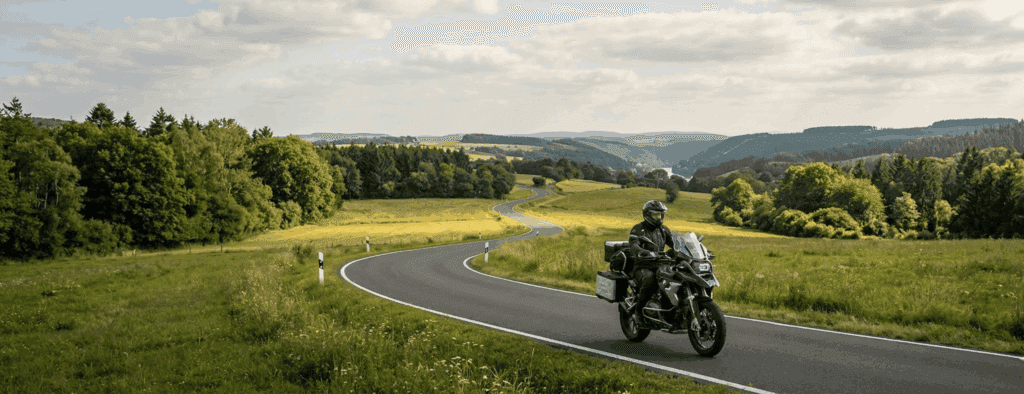
Recommended for beginners
Eifel
Close to the Netherlands, with plenty of good roads and enough variety without having to tackle extremely technical mountain roads straight away. For many riders, this is the most logical first step across the border.
- Ideal for 2–3 days
- Plenty of flowing bends
- Wide choice of hotels
- Easy to reach from the Netherlands

Compact & manageable
Luxembourg
Compact, varied and well suited to a first short trip abroad. Routes are easy to shorten, but make sure you know the local traffic rules and have the required documents and equipment with you.
- Short distances
- Plenty of scenic back roads
- Routes are easy to shorten
- Be aware of local rules and checks
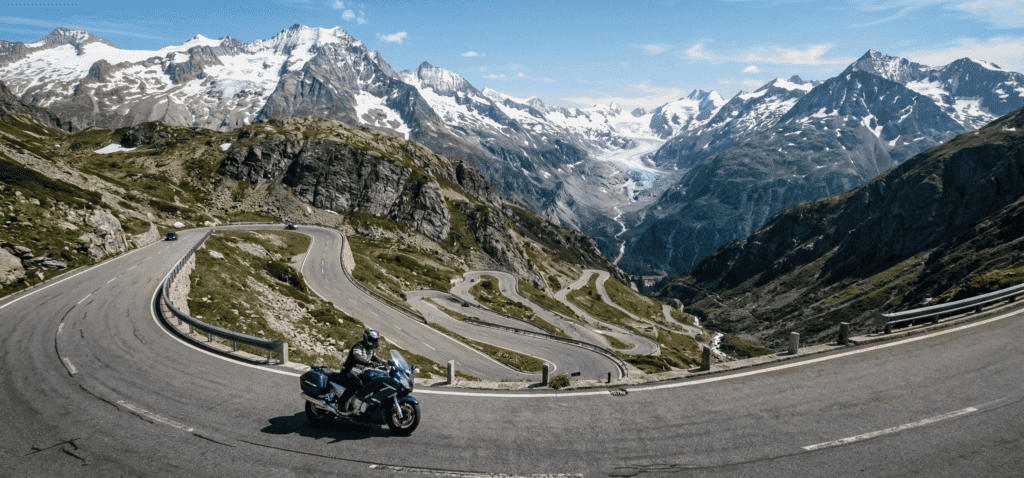
Next step
The Alps
Ready for real mountain passes? Do not automatically start with the most famous or most difficult pass. Choose an accessible first pass and gradually build up the technical difficulty.
- More elevation change
- More hairpin bends
- Weather has a bigger impact
- More preparation required
MotorMakkers Rookie Route
Not every great route is a good first route
With our Rookie Routes, we select routes that are enjoyable enough to feel like a proper motorcycle trip, but manageable enough for less experienced touring riders to enjoy at a relaxed pace.
We do not just look at distance, but also at technical sections, hairpins, road type, busy towns, rest stops and the practical feasibility of the entire day.
What we look for in a Rookie Route
Day distanceManageable
Technical difficultyLow / medium
BendsPlenty
Extremely narrow roadsLimited
Rest & fuel optionsGood
GPXTested
GPX and navigation: understand what you are loading
Downloading a GPX file is easy. Making sure your navigation system does exactly what you expect on the road takes a little more attention.
GPX for beginners: how it works
Learn the difference between routes, tracks and waypoints, and discover why the same GPX can behave differently on different navigation systems.
GPX for beginners: how it worksWhat will your route feel like to ride?
MM FlowIndex gives you a better idea in advance of the bends, flow, elevation and technical characteristics of a GPX route.
Analyse with FlowIndexAre there restrictions on your route?
Check whether your GPX runs into known road closures, motorcycle restrictions, dB limits or closed mountain passes.
Open Route CheckerPlanning an Alpine ride?
Compare mountain passes by elevation, hairpins, gradient, riding character and current status before adding them to your trip.
Compare Alpine passesPrepare for your trip without packing half your house

Good preparation is not about taking as much as possible. It is about having the most important things sorted so you do not have to improvise unnecessarily while travelling.
Motorcycle and maintenance
Check tyres, tyre pressure, chain, brakes, lights, fluids and whether scheduled maintenance is likely to fall right in the middle of your trip.
Luggage
Pack heavy items low and centrally. Keep rain gear, documents and items you use on the road easy to reach.
Documents & breakdowns
Make sure insurance details, breakdown cover, driving licence, vehicle documents and important phone numbers are also available offline.
Accommodation
For your first multi-day trip, booking ahead often makes things more relaxed. Also look for secure motorcycle parking and consider how well the accommodation is positioned for your planned routes.
The final check
Ready to go?
Run through these points once more in the final days before departure. Then, on the morning itself, all that is left to do is start the bike.
GPX downloaded and tested
Navigation and offline maps work
Route checked for restrictions
Weather forecast checked
Accommodation arranged
Motorcycle mechanically checked
Tyres and tyre pressure are good
Insurance and breakdown cover understood
Documents packed
Packing list completed
First motorcycle holiday?
Going on your first motorcycle holiday? Start here
From day distances and route planning to luggage, documents, motorcycle checks and accommodation. In our complete preparation guide, we take you step by step through what you should arrange before departure.
Day distances
Route planning
Luggage
Motorcycle check
Accommodation
Go to the complete preparation guide
Frequently asked questions
First motorcycle holiday: practical questions
How many kilometres should I plan for my first motorcycle holiday?
That depends heavily on the type of roads. For a day with lots of smaller roads, around 150 to 250 kilometres is a comfortable range for many riders. Leave some margin rather than trying to hit a strict kilometre target every day.
What is a good destination for my first motorcycle weekend?
The Eifel and Luxembourg are strong choices because they are relatively close, offer plenty of good roads and make it easy to adapt the route to your own pace and experience.
Should I book my hotels in advance?
For a first trip, that can provide a lot of peace of mind. You know where your day will end and do not have to search for suitable accommodation after a long ride.
Are the Alps suitable for a first motorcycle holiday?
They certainly can be, but choose your routes carefully. Not every Alpine pass is equally accessible. Start with manageable roads, keep your riding days shorter and do not underestimate elevation, weather and fatigue. View the Alps for beginners.
How do I know whether a GPX route is too difficult?
Look beyond distance alone. The number of bends, hairpins, elevation changes, road type and technical sections tell you much more about how demanding a route is likely to be. The MM FlowIndex can help you assess this.
Now you only need to choose where to go
Start small, choose a route that suits you and make sure the practical basics are sorted. You will learn the rest along the way. And chances are that after your first weekend, you will already be planning the next one.