

Motorcycle Routes in Europe
Motorcycle Routes in Luxembourg: Complete Guide & GPX Downloads
Luxembourg is far more than a country you simply pass through. As soon as you leave the motorway, you are straight onto smooth asphalt with a great rhythm: short sequences of bends, elevation changes and hardly any wasted kilometres. For riders from the Netherlands and Belgium, it is one of the few places where you can reach genuinely enjoyable riding roads within just a few hours. It is a country of technical sections, flowing sweepers, quieter connecting roads and beautiful scenery.
Luxembourg is far more than a country you simply pass through. As soon as you leave the motorway, you are straight onto smooth asphalt with a great rhythm: short sequences of bends, elevation changes and hardly any wasted kilometres. For riders from the Netherlands and Belgium, it is one of the few places where you can reach genuinely enjoyable riding roads within just a few hours. It offers technical sections, flowing sweepers, quieter connecting roads and beautiful scenery. That makes Luxembourg suitable for a day ride, but also for a compact weekend in which you can combine several different riding styles.
Navigate to
Download GPX Motorcycle Routes for Luxembourg
Use this as your starting point. No searching—just load the route and ride.
Watch the Video About This Route
More Inspiration: Motorcycle Trips in Luxembourg
The Best Regions for Motorcycle Riding in Luxembourg
Luxembourg is small, but hugely varied: from technical forest and hill roads to enjoyable sweepers and relaxed river roads.

Mullerthal (Little Switzerland): Technical and Narrow
Mullerthal is all about precision. Between Echternach and Berdorf, you ride narrow, winding roads with short bends and limited visibility. The asphalt is good, but in wooded sections it stays damp for a long time, especially around the Schiessentümpel. This is not an area for rolling through on autopilot; here you actively work with your line and throttle. If you are looking for enjoyable riding and short sequences of bends, motorcycle riding in Mullerthal is definitely for you.
Mullerthal, commonly known as Little Switzerland, delivers the most technical riding in Luxembourg. Where other parts of the region let you settle into a flow, this area demands sharpness and precision with short bend sequences and blind turn-ins. You do not come to Mullerthal just to tour; you come here to actively ride a motorcycle.
Riding in Mullerthal: Road and Surroundings as One
In Mullerthal, the geography and landscape directly determine your riding lines and the condition of the road surface. The roads run tightly between massive sandstone rocks and dense deciduous forests, which has a practical impact on every kilometre.
The asphalt quality is generally very good throughout Luxembourg, but this microclimate demands your attention. Because the dense forests and high rocks often block the sunlight, the roads stay in the shade for a long time. This lowers the asphalt temperature considerably and allows moisture, especially in the morning, to linger for longer. That forces you to keep monitoring and adjusting your lean angle and acceleration as you move between damp forest sections and drier open stretches.
The sightlines can be genuinely deceptive. The characteristic rock formations often sit right on the inside of the bend without a proper verge, which means you cannot see through the corner. A slightly later apex gives you more visibility and more room to react if there is oncoming traffic.
Beautiful Roads
- CR121 (Black Ernz Valley): This is the 16 km technical backbone of Mullerthal. The road winds along the river with a rapid sequence of short bends. The camber is generally positive, giving more grip, but the light flickers through the trees, especially in spring and autumn, which affects your judgement when braking.
- CR118 (towards Beaufort): Here you move from dense forests to a more open plateau on a road of about 26 km. The bends are easier to read than on the CR121 and the asphalt immediately absorbs more warmth from the sun, so the pace can naturally rise.
- Traffic: Because of tourism in the area, hiking trails regularly cross the N and CR roads. Behind blind bends near the rock formations, you need to account for braking cars or pedestrians crossing the road.
Best Stops Along the Route
An intensive section within a ride calls for pleasant, scenic or strategic breaks without having to park the motorcycle at an awkward angle on unpaved ground.
Schiessentümpel Car Park
The Schiessentümpel is one of those places in Mullerthal where you really should get off the bike for a moment. The waterfall flows under a characteristic stone bridge and sits between rocks and dense forest, making it a beautiful place for a short stop.
After the most technical and twisty section of the CR121, this is a good moment to give your wrists a short rest. The parking strip is paved asphalt and runs parallel to the main route, so you can easily park the motorcycle and get off steadily.
Echternach Petrol Station
Logistically, this is the most practical stop in the region and ideal for starting or finishing your motorcycle ride. You can reliably fill up with RON 98 here, the pumps are spacious, and the connection to the N10 and other roads makes the location useful. From here, you can link together some of the best motorcycle roads around Echternach.
Beaufort Castle
Beaufort Castle offers a pleasant and clear resting point after the climb via the CR118. The parking area directly by the castle is a good place to enjoy the fortress and clean your visor before continuing through the bends of the Little Switzerland route.
Practical Tips for Motorcyclists
- Think about tyre temperature: As soon as you enter Mullerthal, the asphalt cools down. Sport-touring tyres with a quick warm-up time and a broad temperature range offer more confidence here than more sport-focused tyres that need heat for optimal performance.
- Road edges: Dirt often builds up close to the rock walls, such as fallen leaves or fine gravel, which can make that part slippery. Keep your motorcycle on the clean ridden line and do not cut too sharply into the bends.
- Timing: Want maximum grip and flow? Ride this area in the late morning or early afternoon, once the dew has lifted and the early walking crowds have passed.

Luxembourg Ardennes (Éislek): Flow, Elevation and Longer Bends
In the north, around Vianden and Esch-sur-Sûre, the character changes completely. The Éislek offers more space: longer bends, better visibility and clear elevation changes. Roads around the Lac de la Haute-Sûre offer a pleasant rhythm without becoming too technical. This is the area where you can build pace and settle into a flow. Ideal for a full day of riding or a first motorcycle trip abroad.
The Luxembourg Ardennes—locally known as the Éislek—form the main riding area in the north. From Belgium and the Netherlands, you can reach them relatively quickly and move straight from the motorway onto well-surfaced N-roads and more technical CR connecting roads (Chemins Repris). This guide looks specifically at asphalt quality, blind apexes and useful stop points in the north, while the wider Luxembourg hub gives you the broader overview and logistical basis for the whole trip.
Below you can see exactly what to expect under your tyres: a road-by-road view for riders who want to know what they are heading into.
Road by Road: Network & Corner Analysis
Forget the tourist brochures; here it is about grip, lean angles and sightlines. The Éislek has a dual character: faster sweepers in the valleys and technical, sometimes rougher climbs on the flanks.

The N10 (Our Valley): Flowing sweepers with changing camber The N10 runs closely along the border river Our and is one of the smoothest roads in the region. Between Vianden and Dasbourg-Pont, you ride a continuous series of medium-speed bends.
- The asphalt: Very smooth and predictable, but pay attention to the camber. Some left-hand bends fall away slightly on the outside, which can affect ground clearance on heavily loaded adventure or sport-touring motorcycles.
- Hazard: Early in the morning, moisture can linger for a long time because of the shade from wooded slopes. Cold tyres and early apexes can be a risky combination here.
The N27 (Sûre Valley): Technical bends and blind sections From Erpeldange-sur-Sûre to Esch-sur-Sûre, the N27 offers a long sequence of turn-ins and acceleration zones as the road follows the tight loops of the river.
- The asphalt: Variable. The main line is generally smooth, but the edges can be rougher in places.
- Hazard: Rock walls directly beside the road create completely blind sweepers. Keep your line safely on your own side of the road and leave margin for oncoming traffic.
The North (around Clervaux & the CR roads) Where the N-roads are more forgiving, the secondary CR roads, such as the CR342 or CR326, demand more focus. Here you leave the valleys and take short, steep hairpins up towards the plateaus.
- The asphalt: Expect surprises. Tree roots can push up the surface, heavy agricultural traffic can create ruts, and sections can change suddenly from smooth asphalt to older, coarser surfaces.
- Riding style: Trail braking is essential here. Do not commit to the turn until you can properly judge the exit.
Views & Technical Pit Stops
These are useful places to stop for a moment and enjoy the view.
Vianden (N10/CR322 Junction)

- Motorcycle advantage: A central junction for routes towards the Eifel in Germany or deeper into the Éislek.
- Parking: Flat cobbles at the foot of the castle hill. Avoid parking on the steepest slopes around Vianden Castle unless you are comfortable turning a loaded motorcycle on an incline.
- Fuel: There are several filling stations in and around the village. This is a practical place to fill up before heading onto the more remote CR roads.
Esch-sur-Sûre (Centre via the CR316)

- Motorcycle advantage: A good stop after the intensive N27.
- Parking: The bridge into the village is narrow. Park on the square just below the ruins. Note: The asphalt slopes here. Put the motorcycle in gear and position it carefully so it cannot roll.
- Terrace: Hôtel de la Sûre is a convenient option if you want to keep the motorcycles in sight from the terrace and have some space for your riding gear.
Martelange (N4 / Fuel Strip)
- Motorcycle advantage: A popular fuel stop on the Belgian border, where fuel is often cheaper than in neighbouring countries.
- Hazard: The asphalt around busy filling stations can be contaminated by diesel or other fuel residue from heavy traffic. Manoeuvre carefully and avoid abrupt braking if the surface looks dirty or greasy.
Asphalt Conditions & Grip by Season
Motorcycling in the Luxembourg Ardennes means dealing with changing road and tyre conditions throughout the season.
- Spring (March - May): The N-roads clean up quickly, but CR roads under tree cover can retain salt residue and moisture. Asphalt in the deeper valleys, such as along the N27, can remain noticeably cooler than on the plateaus. Adapt your pace to the conditions.
- Summer (June - August): Grip is generally excellent on roads such as the N10. The main surprise comes from agricultural traffic, which can leave mud and gravel on the riding line after blind bends.
- Autumn (September - November): This can be the most technical period. Fallen leaves can make tight bends slippery, while low sun reflects strongly from wet asphalt and makes gravel or oil traces harder to read. A clear visor setup with good anti-fog performance becomes especially useful.
Traffic Rules for Motorcyclists in Luxembourg
Luxembourg is compact and enjoyable to explore by motorcycle, but the local rules and enforcement are worth knowing before you go. During the motorcycle season, the Luxembourg police carry out targeted checks that can include speed, helmets, required safety equipment, documents, tyres and the technical condition of the motorcycle.
Helmet and Safety Vest
Approved helmet required: your motorcycle helmet must carry a valid approval or ECE marking. If you replace the visor, make sure that is suitable and approved as well.
Carry a safety vest: a high-visibility safety vest is part of the required safety equipment in Luxembourg and is one of the items checked during motorcycle controls.
Motorcycle and Documents
Documents: make sure your driving licence and the vehicle and insurance documents required for your motorcycle and trip are available.
The motorcycle must be road legal: the exhaust, lighting, number plate and other technical components must comply with the applicable rules.
Tyres: the legal minimum tread depth for motorcycle tyres is 1.6 mm. Luxembourg police themselves advise at least 2.5 mm.
Speed Limits
Unless road signs indicate another limit, motorcycles in Luxembourg generally follow the same speed limits as passenger cars.
50
Built-up areas
90
Outside built-up areas
130
Motorways
110
Motorways in rain
Road signs and temporary restrictions always take priority. Pay particular attention when entering and leaving villages, where the permitted speed can change quickly.
Speed Cameras and Police Checks
Luxembourg uses both fixed and mobile speed enforcement. During the motorcycle season there are also targeted police checks covering matters such as speed, riding behaviour, helmets, safety vests, tyres, documents and technical modifications.
Filtering Through Traffic
Do not assume the same practical rules apply as in the Netherlands. Luxembourg police advise motorcyclists not to ride past queues of vehicles when visibility is insufficient and specifically advise against filtering through motorway traffic jams.
MotorMakkers tip
Before you leave, check at least your safety vest, helmet, documents, tyres and whether the motorcycle is fully road legal.
Official information: Police Grand-Ducale · Transports.lu
Frequently Asked Questions
Are the Luxembourg Ardennes suitable for beginner riders?
Yes, especially if you stay on the N-roads such as the N10 and N27. These offer predictable, flowing bends with a relatively consistent radius. Smaller CR roads can require more experience with observation, positioning and trail braking because some bends tighten unexpectedly.
How much time do I need for this region?
A day ride from the border region is logistically possible, but it limits you mostly to the main roads. A full weekend gives you more time for the technical CR loops in the north and removes much of the time pressure.
Should I do a pre-trip motorcycle check for Luxembourg?
Yes. Check suspension setup, especially with luggage, and make sure your tyres have sufficient tread for wet conditions in the wooded valleys. Riding with the manufacturer's recommended tyre pressures is the sensible starting point, and the motorcycle should be in good technical condition before departure.

Moselle Valley: Relaxed Riding and Clear Views
Around Remich and Grevenmacher, the focus shifts towards calm. The roads along the Moselle are wider, clearer and less technical. Here you do not get a sequence of hairpins, but flowing lines along vineyards and villages. This area mainly works as the cool-down phase of your day: lower the pace and enjoy the views. It is a logical way to finish a more intensive ride through the north or Mullerthal.
The Moselle Valley in southeastern Luxembourg requires a different riding style from northern Luxembourg. Here we specifically look at the roads between Schengen, Remich and Grevenmacher and why this area is worth riding. Within a day ride, the region acts as a transition or cool-down phase: technical riding gives way to wider road profiles, long sightlines and a lower average speed because of the higher concentration of built-up areas.
The Character of the Moselle Region
Motorcycling along the Moselle in Luxembourg is characterised by flowing roads without abrupt elevation changes, provided you follow the river. The main roads through this area are clear, wide and generally easy to read.
The surroundings have a direct impact on riding conditions. On sunny days, the open valley heats up quickly and the asphalt can offer plenty of grip. In spring, autumn or the early morning, the nearby river can instead create mist and condensation, especially below the tree line or in shaded bends.
Main Road Sections in the Valley
The area can roughly be divided into two functional parts: the riverside road and the higher vineyard roads.
The N10 (Schengen - Remich - Grevenmacher)
The N10 runs for roughly 30 km along the left side of the river. The asphalt is generally very good and the road is broad and smooth. There are many long flowing bends with clear visibility ahead. The route also passes through a series of villages where lower speed limits apply and are regularly enforced. Outside built-up areas, overtaking opportunities can be limited by oncoming traffic on the two-lane road.
CR Roads Through the Vineyard Slopes

If you are specifically looking for more bends in the Luxembourg Moselle region, leave the N10 and head up the western slopes. Local roads such as the CR119 and CR122 climb through the vineyards, immediately changing the riding dynamics:
- Asphalt: Variable quality, ranging from smooth to heavily repaired.
- Bends: Tighter and occasionally blind because of high vegetation or walls.
- Grip: There is a recurring risk of reduced grip from mud, sand or gravel left by agricultural vehicles working in the vineyards.
- Visibility: More limited when entering bends that run tightly along the hillside.
Beautiful Stops Along the Route
The roads along the Moselle are well set up for traffic, which makes many places easy to access.
Remich: Parking and Fuel
Remich functions as the main junction in the valley. Along the N10 (Esplanade), there is a long paved parking strip directly beside the main road. That makes it a useful place for a short break without having to ride into the centre. Just south of the village centre, there are several large filling stations with spacious entrances and exits, which is convenient if you are riding in a larger group.
Grevenmacher: Route Junction
Grevenmacher forms the logical northern endpoint of the Moselle section before the border river becomes the Sauer / Sûre. From here, you can head directly onto the N1 towards Luxembourg City or towards Trier, where you can continue your motorcycle trip into the Eifel. You will also find several large filling stations before heading towards the more remote roads of Mullerthal or the north.
Practical Tips for Motorcyclists in the Moselle Valley
- Traffic: At weekends, the roads between Remich and Grevenmacher attract cyclists, campervans and day visitors. If you want a quieter ride, a weekday is usually the better choice.
- Temperature difference: The open vineyards can become noticeably warmer than the wooded regions farther north. Adjust your pace and clothing accordingly on hot summer days.
Useful Stops for Motorcyclists
Lunch Stop in Esch-sur-Sûre
A compact village in a river loop with parking close to the centre. A convenient place for a short lunch before continuing towards the next section of bends.
Motorcycle Parking at Bourscheid Castle
The ride up to Bourscheid Castle is part of the experience: climbing, turning and wide views. At the top, there are practical places to park before rejoining a strong route through the region.
Haute-Sûre Reservoir Stop
You will meet plenty of riders around the Lac de la Haute-Sûre. It is a good place for a short break without having to make a major detour from your route.
Practical Tips for Motorcycling in Luxembourg
Best period
May to September. Spring can mean cooler asphalt and damp forest roads, while September is often calmer.
Riding style & enforcement
Speed, riding behaviour and the technical condition of motorcycles can be checked. Ride with margin and keep the bike road legal.
Fuel
Fuel prices are often attractive, but filling stations close to the border can be busy. Riding a little farther into the country can mean quieter stops.
Equipment
A normal weekend setup is enough for most trips. Bring a waterproof layer, carry the required safety vest and use a GPX or navigation app if you want to connect the best roads efficiently.
Conclusion: Small Country, Big Riding Value
Luxembourg offers exactly what many touring riders are looking for: continuously interesting roads without huge distances between the good sections. Technical riding in Mullerthal, flow in the Éislek and a calmer finish along the Moselle. No unnecessary drama—just very good motorcycle roads within a few hours of home for riders from the Netherlands and Belgium.
Frequently Asked Questions About Motorcycling in Luxembourg
How many days do you need for Luxembourg?
Two to three days is ideal. A shorter trip is possible, but you will miss some of the variety between Mullerthal, the Éislek and the Moselle.
Is Luxembourg suitable for beginner motorcyclists?
Yes, especially the more open roads in the Éislek. Mullerthal is more technical and demands more control and concentration.
When are the roads quietest?
Weekdays and September are often quieter. Weekends and the summer holiday period are noticeably busier on popular routes.
Do you need a GPX route in Luxembourg?
It is not mandatory, but it is very useful. The best riding roads are not always the most obvious roads on the map, so a good GPX makes it easier to connect the strongest sections.
MotorMakkers Start
Your first motorcycle holiday: how to get started well prepared
Planning your first weekend or multi-day motorcycle trip abroad? Here we guide you step by step: from choosing a suitable destination and GPX route to luggage, navigation, accommodation and the final checks before departure.
A motorcycle holiday does not have to be complicated
Your first multi-day motorcycle trip can feel like a bigger undertaking than it really is. How many kilometres should you plan? Which roads are suitable? How does a GPX work? What should you pack and where should you stay? The most important thing is not organising everything perfectly, but making the right choices in the right order.
That is why you will not find an endless checklist here of things you supposedly have to do. MotorMakkers Start helps you keep your first trip manageable: a realistic destination, a good route, solid preparation and enough room to simply enjoy the ride.
Your first motorcycle holiday in 6 steps
Do not start by buying gear. Start with the trip you want to make. Once that is clear, it becomes much easier to see what you actually need.
1
Choose a realistic destination
You do not have to head straight for the Stelvio on your first trip. A region such as the Eifel, Luxembourg or the Sauerland already gives you that real feeling of riding abroad without making the trip unnecessarily demanding.
View beginner destinations2
Choose a route that suits you
Kilometres only tell part of the story. Also look at bends, technical sections, elevation changes, traffic and how much energy the route is likely to require.
View our motorcycle routes3
Make sure your GPX works
Understand the difference between a route and a track, and test before departure whether your Garmin, TomTom or navigation app handles the file the way you expect.
GPX for beginners4
Plan realistic riding days
A twisty 200-kilometre day can be more tiring than hundreds of motorway kilometres. Leave enough margin for coffee, fuel, lunch and an unexpected stop.
Prepare your motorcycle trip5
Pack smart
Do not take everything that might possibly be useful. Start with what you really need for riding, bad weather, documents, breakdowns and overnight stays.
Create your personal packing list6
Check everything shortly before departure
Check the motorcycle, the weather and your route. A GPX created months ago may now run into a road closure, restriction or closed mountain pass.
Check your GPXWhere should you go on your first motorcycle holiday?
The best first destination is not automatically the most spectacular one. Choose an area that is easy to reach, has plenty of good roads and lets you adjust the difficulty without much effort.
Recommended for beginners
Eifel
Close to the Netherlands, with plenty of good roads and enough variety without having to tackle extremely technical mountain roads straight away. For many riders, this is the most logical first step across the border.
- Ideal for 2–3 days
- Plenty of flowing bends
- Wide choice of hotels
- Easy to reach from the Netherlands
Compact & manageable
Luxembourg
Compact, varied and well suited to a first short trip abroad. Routes are easy to shorten, but make sure you know the local traffic rules and have the required documents and equipment with you.
- Short distances
- Plenty of scenic back roads
- Routes are easy to shorten
- Be aware of local rules and checks
Next step
The Alps
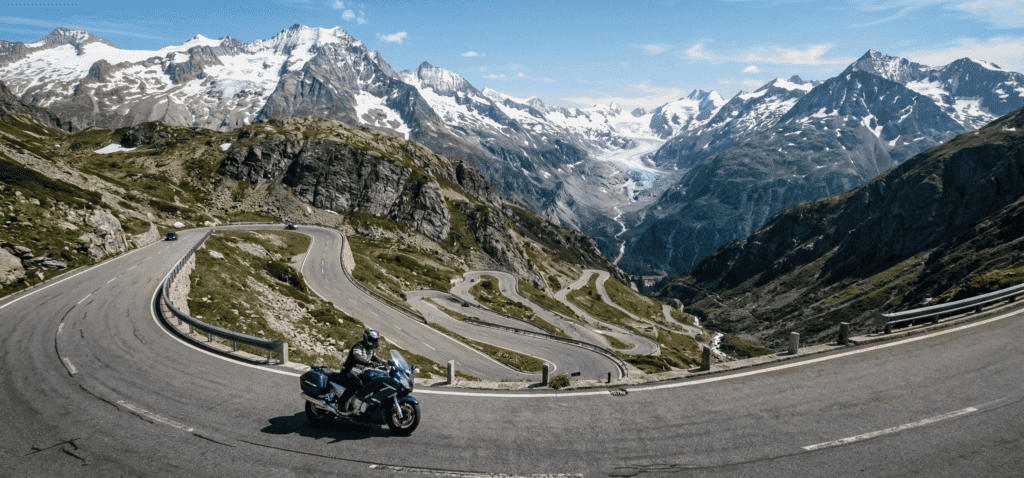
Ready for real mountain passes? Do not automatically start with the most famous or most difficult pass. Choose an accessible first pass and gradually build up the technical difficulty.
- More elevation change
- More hairpin bends
- Weather has a bigger impact
- More preparation required
MotorMakkers Rookie Route
Not every great route is a good first route
With our Rookie Routes, we select routes that are enjoyable enough to feel like a proper motorcycle trip, but manageable enough for less experienced touring riders to enjoy at a relaxed pace.
We do not just look at distance, but also at technical sections, hairpins, road type, busy towns, rest stops and the practical feasibility of the entire day.
What we look for in a Rookie Route
Day distanceManageable
Technical difficultyLow / medium
BendsPlenty
Extremely narrow roadsLimited
Rest & fuel optionsGood
GPXTested
GPX and navigation: understand what you are loading
Downloading a GPX file is easy. Making sure your navigation system does exactly what you expect on the road takes a little more attention.
GPX for beginners: how it works
Learn the difference between routes, tracks and waypoints, and discover why the same GPX can behave differently on different navigation systems.
GPX for beginners: how it worksWhat will your route feel like to ride?
MM FlowIndex gives you a better idea in advance of the bends, flow, elevation and technical characteristics of a GPX route.
Analyse with FlowIndexAre there restrictions on your route?
Check whether your GPX runs into known road closures, motorcycle restrictions, dB limits or closed mountain passes.
Open Route CheckerPlanning an Alpine ride?
Compare mountain passes by elevation, hairpins, gradient, riding character and current status before adding them to your trip.
Compare Alpine passesPrepare for your trip without packing half your house

Good preparation is not about taking as much as possible. It is about having the most important things sorted so you do not have to improvise unnecessarily while travelling.
Motorcycle and maintenance
Check tyres, tyre pressure, chain, brakes, lights, fluids and whether scheduled maintenance is likely to fall right in the middle of your trip.
Luggage
Pack heavy items low and centrally. Keep rain gear, documents and items you use on the road easy to reach.
Documents & breakdowns
Make sure insurance details, breakdown cover, driving licence, vehicle documents and important phone numbers are also available offline.
Accommodation
For your first multi-day trip, booking ahead often makes things more relaxed. Also look for secure motorcycle parking and consider how well the accommodation is positioned for your planned routes.
The final check
Ready to go?
Run through these points once more in the final days before departure. Then, on the morning itself, all that is left to do is start the bike.
GPX downloaded and tested
Navigation and offline maps work
Route checked for restrictions
Weather forecast checked
Accommodation arranged
Motorcycle mechanically checked
Tyres and tyre pressure are good
Insurance and breakdown cover understood
Documents packed
Packing list completed
First motorcycle holiday?
Going on your first motorcycle holiday? Start here
From day distances and route planning to luggage, documents, motorcycle checks and accommodation. In our complete preparation guide, we take you step by step through what you should arrange before departure.
Day distances
Route planning
Luggage
Motorcycle check
Accommodation
Go to the complete preparation guide
Frequently asked questions
First motorcycle holiday: practical questions
How many kilometres should I plan for my first motorcycle holiday?
That depends heavily on the type of roads. For a day with lots of smaller roads, around 150 to 250 kilometres is a comfortable range for many riders. Leave some margin rather than trying to hit a strict kilometre target every day.
What is a good destination for my first motorcycle weekend?
The Eifel and Luxembourg are strong choices because they are relatively close, offer plenty of good roads and make it easy to adapt the route to your own pace and experience.
Should I book my hotels in advance?
For a first trip, that can provide a lot of peace of mind. You know where your day will end and do not have to search for suitable accommodation after a long ride.
Are the Alps suitable for a first motorcycle holiday?
They certainly can be, but choose your routes carefully. Not every Alpine pass is equally accessible. Start with manageable roads, keep your riding days shorter and do not underestimate elevation, weather and fatigue. View the Alps for beginners.
How do I know whether a GPX route is too difficult?
Look beyond distance alone. The number of bends, hairpins, elevation changes, road type and technical sections tell you much more about how demanding a route is likely to be. The MM FlowIndex can help you assess this.
Now you only need to choose where to go
Start small, choose a route that suits you and make sure the practical basics are sorted. You will learn the rest along the way. And chances are that after your first weekend, you will already be planning the next one.