

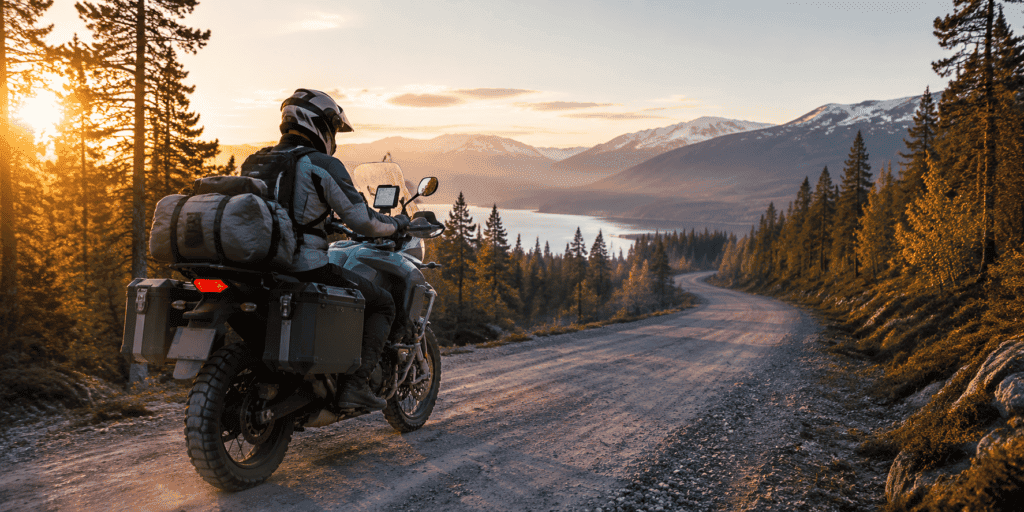
Motorcycle Gear
Motorcycle Navigation & Electronics: Never Lose Your Way Again
Getting lost may sound romantic, but the charm quickly wears off when you are standing in the Eifel with an empty tank and no signal. The right navigation and electronics make the difference between a frustrating search and perfect flow. At Motormakkers, we judge equipment only by real-world experience. From dedicated…
Getting lost may sound romantic, but the charm quickly wears off when you are standing in the Eifel with an empty tank and no signal. The right navigation and electronics make the difference between a frustrating search and perfect flow. At Motormakkers, we judge equipment only by real-world experience. From dedicated motorcycle navigation to smartphone apps and action cameras: we test everything ourselves during real motorcycle rides.
Filters
Actieve filters

Navigation Systems vs Smartphone Apps
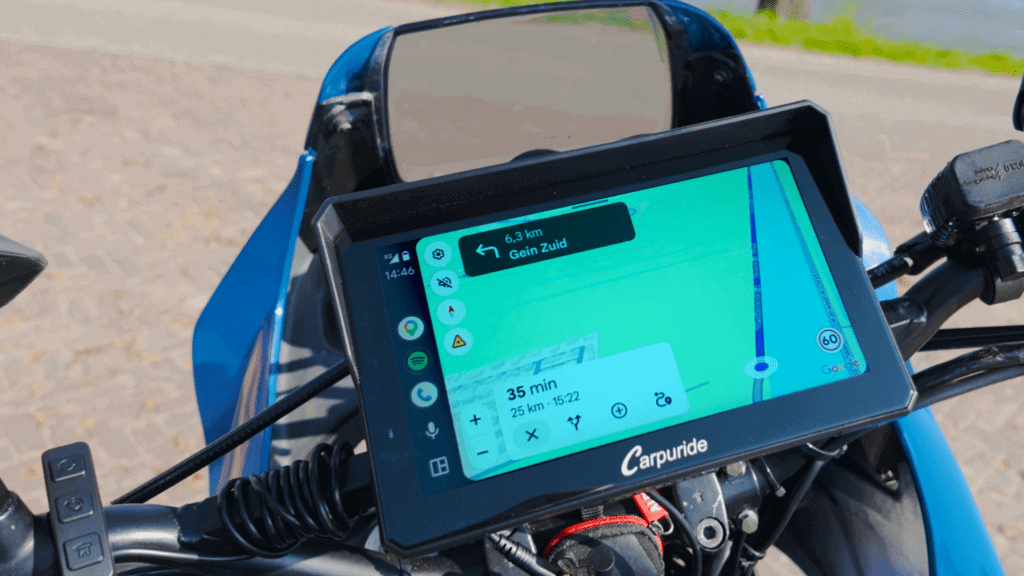
This is the classic dilemma for almost every motorcyclist. If you choose a dedicated navigation system such as the Garmin Zumo XT or TomTom Rider 550, you choose unshakable robustness. These devices are fully waterproof, perfectly readable in direct sunlight, easy to operate with gloves on and they do not overheat. The downside is the higher purchase price and an interface that often feels less flexible than what you are used to from a modern phone.
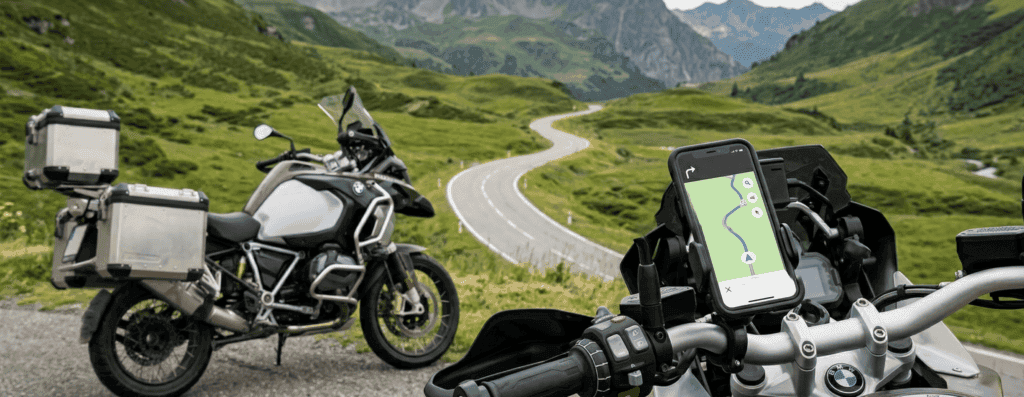
On the other hand, there are smartphone apps such as MyRoute-app, Calimoto or Scenic. This is often an accessible alternative that excels in route planning, GPX imports and fast software updates. The downside is hardware vulnerability. Smartphones can overheat in bright sun, the battery drains quickly while navigating and the screen often reacts badly to raindrops.
The honest conclusion: Do not stare blindly at specifications, but choose reliability on the road. For weekend riders who ride local routes, a smartphone with a high-quality mount is often more than enough. But are you heading out on serious trips, into the Alps or riding extremely long days? Then the robustness of a dedicated navigation system usually wins. It is also wise to check your trip in advance for road closures and noise checks using our GPX Route Checker.
All apps work with GPX files. Use our motorcycle tools to check and prepare your route before you ride.
Hardware on the Handlebars
Excellent software is worthless with a poor physical setup, and this is where things often go wrong in practice. When mounting a navigation unit, a solid attachment such as a RAM Mount is the absolute standard. Always place the screen within your natural line of sight, so you do not have to take your eyes far off the road.
Using a smartphone? Then a mount with vibration damping is crucial. Without this damping, high-frequency motorcycle vibrations can permanently damage the optical image stabilisation in your phone camera. Make sure the mount is at least splashproof and that you can quickly click the phone out during a fuel stop. Do not save money here: with a cheap no-name mount, there is a good chance your phone will eventually bounce across the asphalt.
Finally, a reliable power supply is essential. Without power, your navigation simply stops. Fit a waterproof USB connection, preferably switched through the ignition to prevent your battery from draining when the motorcycle is parked. Route the cables neatly along the handlebars to avoid dangerous situations.
Communication & Intercom
Riding is more enjoyable when you can communicate, as long as the system works flawlessly. A good intercom lets you talk with your passenger or group, hear navigation instructions clearly or listen to music. Market leaders such as Cardo, including the Packtalk Edge, and Sena, including the 50S, dominate this category.
When buying, pay close attention to sound quality at higher speeds; wind noise quickly overpowers cheap speakers. Also look at battery life and ease of use when pairing with multiple riders. In a group, a cheap intercom or mixing different brands without proper compatibility almost always leads to dropped connections and major frustration.
Video & Audio: Action Cameras
If you want to record your rides, you will quickly end up choosing between a traditional action camera such as the GoPro HERO13 Black and a 360-degree camera such as the Insta360 X4.
The GoPro delivers the highest image quality and is perfect for a classic POV view mounted on your helmet or chest. The Insta360, on the other hand, offers incredible flexibility: you record everything in 360 degrees and only choose afterwards in the app which action you want to show. This saves a lot of setup work and hassle during the ride itself.
Practical tips for both systems: always make sure the mount is rock solid and use the built-in digital image stabilisation. Without firm mounting and stabilisation, your video footage is almost unusable because of vibrations. Always bring extra batteries, and consider an external microphone. Built-in action camera audio is almost always poor on a motorcycle because of wind noise.
Conclusion: Technology Should Support Your Ride
Many motorcyclists make the mistake of loading their bike with too many gadgets, or gadgets that are poorly set up. The ideal electronic setup fits seamlessly with your riding style, works without glitches and is reliable in bright sun as well as pouring rain. Technology should enrich the ride, not frustrate it. Only when your navigation and electronics do their job almost invisibly while riding do you know you have found the perfect setup.
Before you leave
Complete your motorcycle gear
Choose equipment that suits your ride, the season and the conditions on the road.
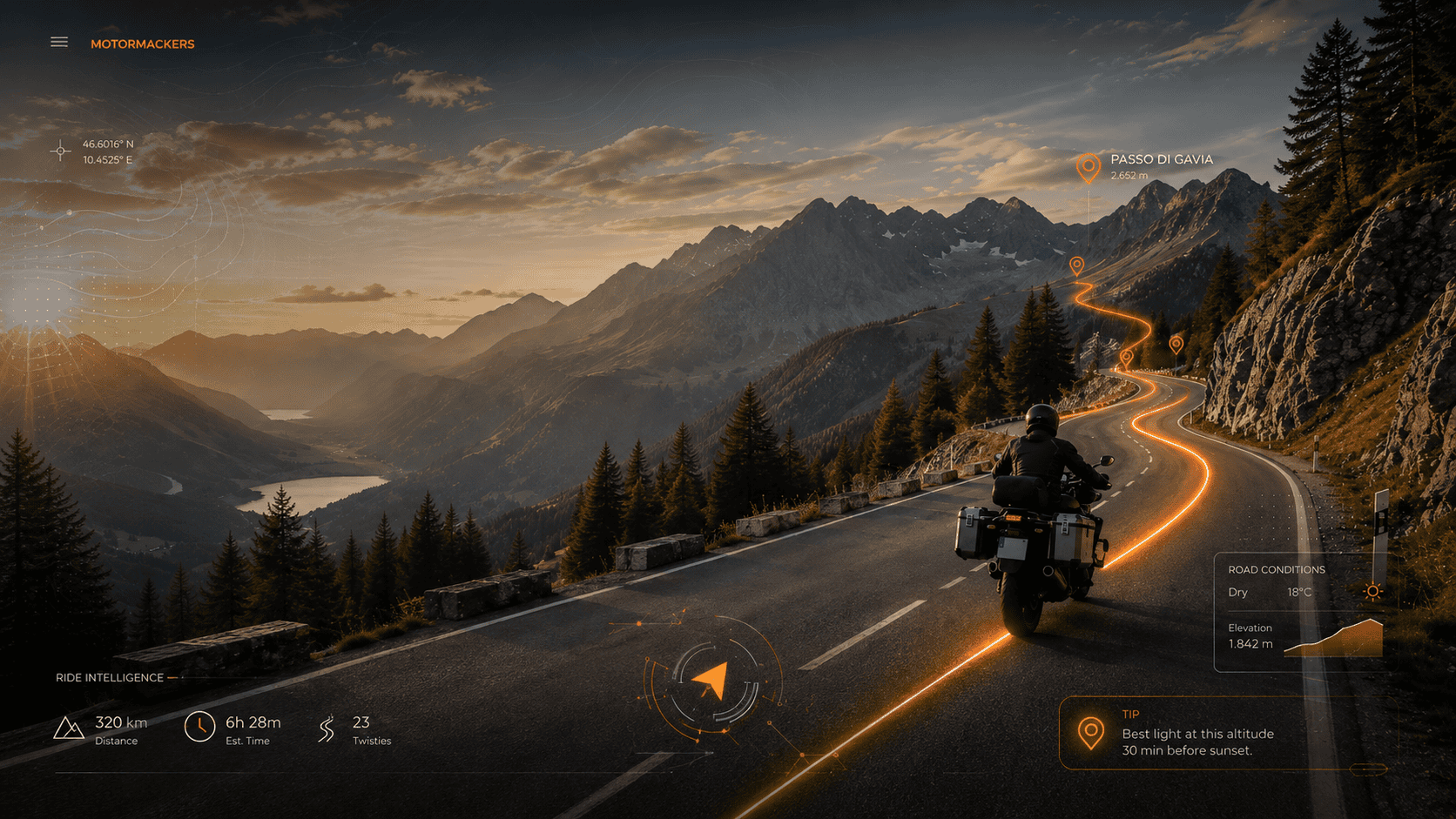
MotorMakkers Start
Your first motorcycle holiday: how to get started well prepared
Planning your first weekend or multi-day motorcycle trip abroad? Here we guide you step by step: from choosing a suitable destination and GPX route to luggage, navigation, accommodation and the final checks before departure.
A motorcycle holiday does not have to be complicated
Your first multi-day motorcycle trip can feel like a bigger undertaking than it really is. How many kilometres should you plan? Which roads are suitable? How does a GPX work? What should you pack and where should you stay? The most important thing is not organising everything perfectly, but making the right choices in the right order.
That is why you will not find an endless checklist here of things you supposedly have to do. MotorMakkers Start helps you keep your first trip manageable: a realistic destination, a good route, solid preparation and enough room to simply enjoy the ride.
Your first motorcycle holiday in 6 steps
Do not start by buying gear. Start with the trip you want to make. Once that is clear, it becomes much easier to see what you actually need.
1
Choose a realistic destination
You do not have to head straight for the Stelvio on your first trip. A region such as the Eifel, Luxembourg or the Sauerland already gives you that real feeling of riding abroad without making the trip unnecessarily demanding.
View beginner destinations2
Choose a route that suits you
Kilometres only tell part of the story. Also look at bends, technical sections, elevation changes, traffic and how much energy the route is likely to require.
View our motorcycle routes3
Make sure your GPX works
Understand the difference between a route and a track, and test before departure whether your Garmin, TomTom or navigation app handles the file the way you expect.
GPX for beginners4
Plan realistic riding days
A twisty 200-kilometre day can be more tiring than hundreds of motorway kilometres. Leave enough margin for coffee, fuel, lunch and an unexpected stop.
Prepare your motorcycle trip5
Pack smart
Do not take everything that might possibly be useful. Start with what you really need for riding, bad weather, documents, breakdowns and overnight stays.
Create your personal packing list6
Check everything shortly before departure
Check the motorcycle, the weather and your route. A GPX created months ago may now run into a road closure, restriction or closed mountain pass.
Check your GPXWhere should you go on your first motorcycle holiday?
The best first destination is not automatically the most spectacular one. Choose an area that is easy to reach, has plenty of good roads and lets you adjust the difficulty without much effort.
Recommended for beginners
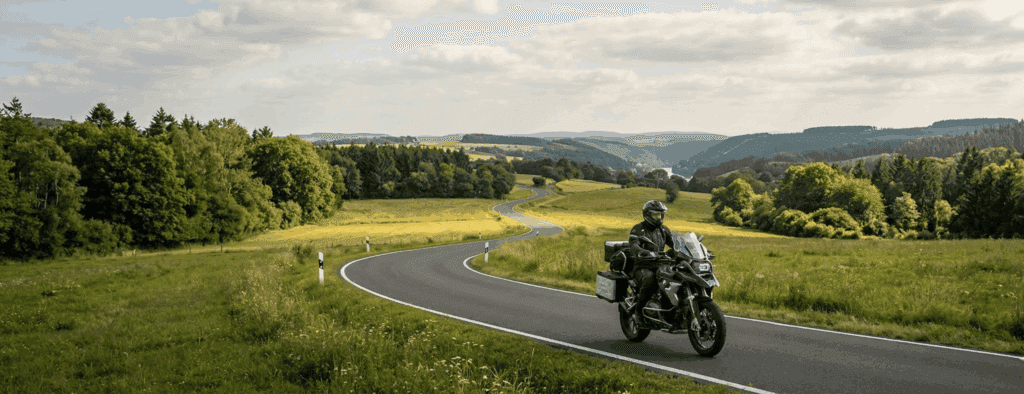
Eifel
Close to the Netherlands, with plenty of good roads and enough variety without having to tackle extremely technical mountain roads straight away. For many riders, this is the most logical first step across the border.
- Ideal for 2–3 days
- Plenty of flowing bends
- Wide choice of hotels
- Easy to reach from the Netherlands

Compact & manageable
Luxembourg
Compact, varied and well suited to a first short trip abroad. Routes are easy to shorten, but make sure you know the local traffic rules and have the required documents and equipment with you.
- Short distances
- Plenty of scenic back roads
- Routes are easy to shorten
- Be aware of local rules and checks
Next step
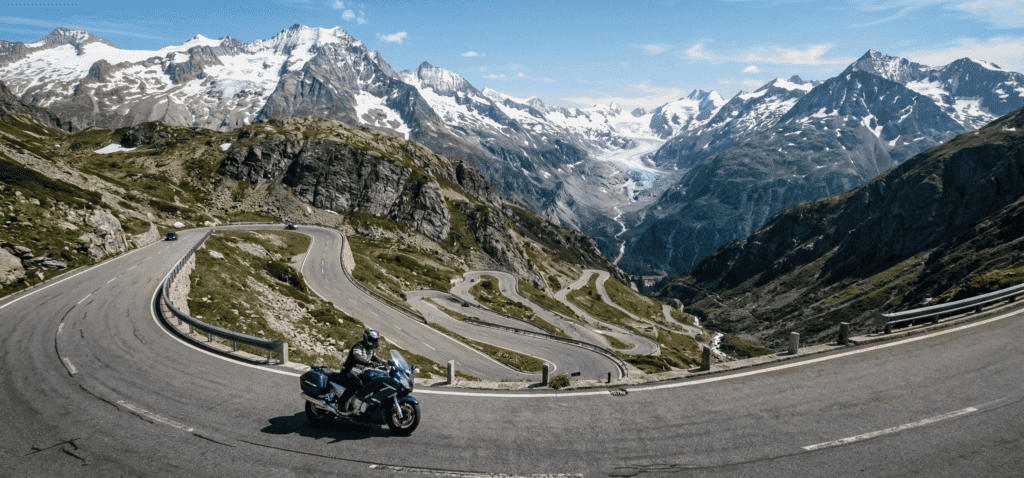
The Alps
Ready for real mountain passes? Do not automatically start with the most famous or most difficult pass. Choose an accessible first pass and gradually build up the technical difficulty.
- More elevation change
- More hairpin bends
- Weather has a bigger impact
- More preparation required
MotorMakkers Rookie Route
Not every great route is a good first route
With our Rookie Routes, we select routes that are enjoyable enough to feel like a proper motorcycle trip, but manageable enough for less experienced touring riders to enjoy at a relaxed pace.
We do not just look at distance, but also at technical sections, hairpins, road type, busy towns, rest stops and the practical feasibility of the entire day.
What we look for in a Rookie Route
Day distanceManageable
Technical difficultyLow / medium
BendsPlenty
Extremely narrow roadsLimited
Rest & fuel optionsGood
GPXTested
GPX and navigation: understand what you are loading
Downloading a GPX file is easy. Making sure your navigation system does exactly what you expect on the road takes a little more attention.
GPX for beginners: how it works
Learn the difference between routes, tracks and waypoints, and discover why the same GPX can behave differently on different navigation systems.
GPX for beginners: how it worksWhat will your route feel like to ride?
MM FlowIndex gives you a better idea in advance of the bends, flow, elevation and technical characteristics of a GPX route.
Analyse with FlowIndexAre there restrictions on your route?
Check whether your GPX runs into known road closures, motorcycle restrictions, dB limits or closed mountain passes.
Open Route CheckerPlanning an Alpine ride?
Compare mountain passes by elevation, hairpins, gradient, riding character and current status before adding them to your trip.
Compare Alpine passesPrepare for your trip without packing half your house

Good preparation is not about taking as much as possible. It is about having the most important things sorted so you do not have to improvise unnecessarily while travelling.
Motorcycle and maintenance
Check tyres, tyre pressure, chain, brakes, lights, fluids and whether scheduled maintenance is likely to fall right in the middle of your trip.
Luggage
Pack heavy items low and centrally. Keep rain gear, documents and items you use on the road easy to reach.
Documents & breakdowns
Make sure insurance details, breakdown cover, driving licence, vehicle documents and important phone numbers are also available offline.
Accommodation
For your first multi-day trip, booking ahead often makes things more relaxed. Also look for secure motorcycle parking and consider how well the accommodation is positioned for your planned routes.
The final check
Ready to go?
Run through these points once more in the final days before departure. Then, on the morning itself, all that is left to do is start the bike.
GPX downloaded and tested
Navigation and offline maps work
Route checked for restrictions
Weather forecast checked
Accommodation arranged
Motorcycle mechanically checked
Tyres and tyre pressure are good
Insurance and breakdown cover understood
Documents packed
Packing list completed
First motorcycle holiday?
Going on your first motorcycle holiday? Start here
From day distances and route planning to luggage, documents, motorcycle checks and accommodation. In our complete preparation guide, we take you step by step through what you should arrange before departure.
Day distances
Route planning
Luggage
Motorcycle check
Accommodation
Go to the complete preparation guide
Frequently asked questions
First motorcycle holiday: practical questions
How many kilometres should I plan for my first motorcycle holiday?
That depends heavily on the type of roads. For a day with lots of smaller roads, around 150 to 250 kilometres is a comfortable range for many riders. Leave some margin rather than trying to hit a strict kilometre target every day.
What is a good destination for my first motorcycle weekend?
The Eifel and Luxembourg are strong choices because they are relatively close, offer plenty of good roads and make it easy to adapt the route to your own pace and experience.
Should I book my hotels in advance?
For a first trip, that can provide a lot of peace of mind. You know where your day will end and do not have to search for suitable accommodation after a long ride.
Are the Alps suitable for a first motorcycle holiday?
They certainly can be, but choose your routes carefully. Not every Alpine pass is equally accessible. Start with manageable roads, keep your riding days shorter and do not underestimate elevation, weather and fatigue. View the Alps for beginners.
How do I know whether a GPX route is too difficult?
Look beyond distance alone. The number of bends, hairpins, elevation changes, road type and technical sections tell you much more about how demanding a route is likely to be. The MM FlowIndex can help you assess this.
Now you only need to choose where to go
Start small, choose a route that suits you and make sure the practical basics are sorted. You will learn the rest along the way. And chances are that after your first weekend, you will already be planning the next one.