
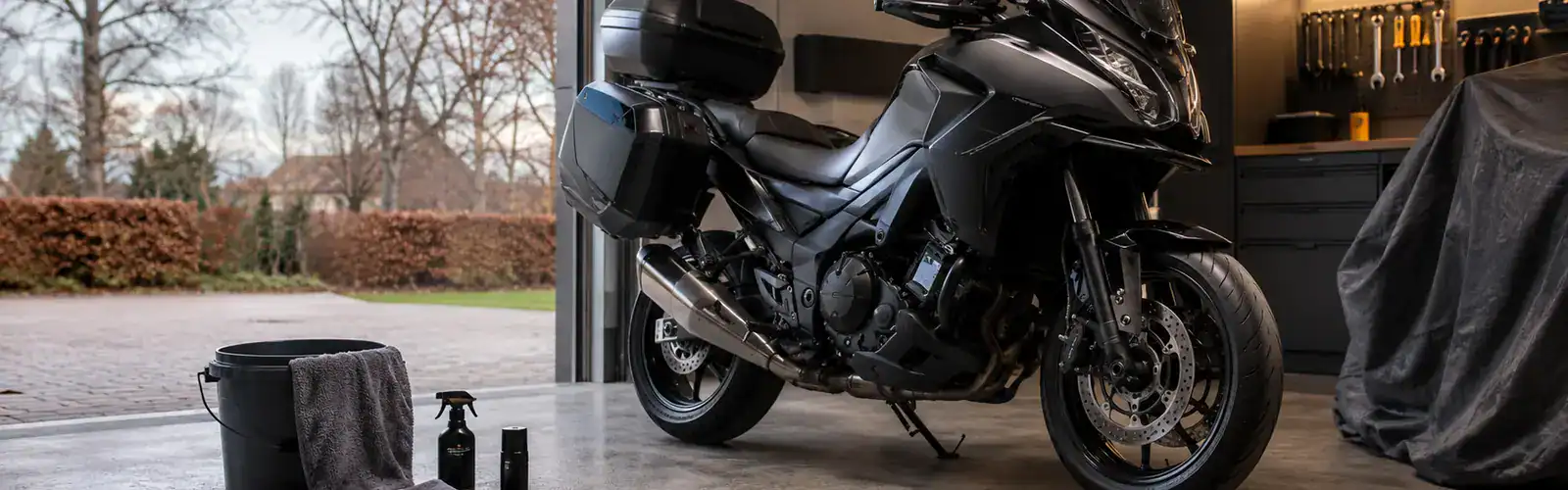
The end of the motorcycle season always seems to arrive too soon. Temperatures drop, the days become shorter and many riders prepare to store their motorcycle for several months. Simply parking it and ignoring it until spring is not a good idea. A flat battery, corrosion, a dry chain or deteriorated fuel can make the first ride of the new season far less enjoyable than expected.
This complete checklist will help you prepare your motorcycle properly for winter and prevent common problems during a long period of storage.
1. Wash the motorcycle thoroughly and let it dry completely
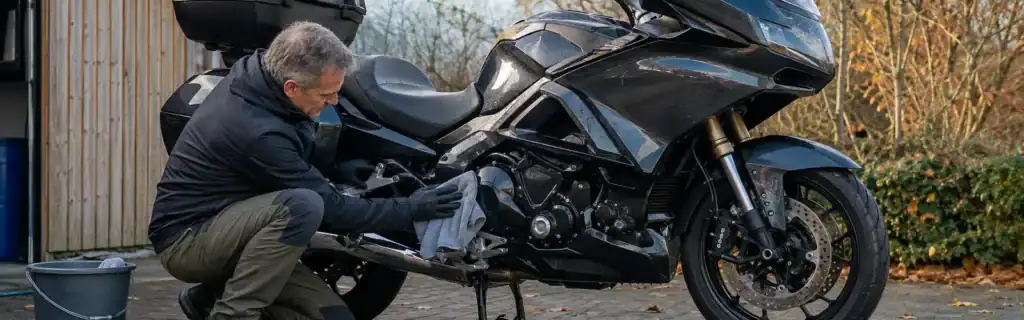
Good winter storage starts with a clean motorcycle. Dirt, brake dust, insect residue and especially road salt retain moisture and can accelerate corrosion when left on the motorcycle for months.
When washing the motorcycle, pay particular attention to:
- the wheels;
- the swingarm;
- the underside of the engine;
- the brake calipers;
- the exhaust system;
- hard-to-reach areas around the frame and fairings.
Avoid directing a powerful pressure-washer jet at bearings, seals, electrical connectors and other vulnerable components.
Let the motorcycle dry properly afterwards
Never place a cover over a wet motorcycle. Blow any remaining water out of gaps and recesses or take a short ride after washing so that airflow and heat can help the moisture evaporate. Make sure the motorcycle is completely dry and has cooled down before covering it.
2. Clean and lubricate the chain
Does your motorcycle have a chain drive? Give the chain some extra attention before putting the bike into winter storage.
- Remove accumulated dirt and old grease with a suitable chain cleaner.
- Check the chain tension.
- Check for stiff or damaged links.
- Inspect the condition of the front and rear sprockets.
- Apply a fresh layer of chain lubricant afterwards.
A clean and properly lubricated chain is better protected against surface rust during a damp winter.
3. Check the tyres and tyre pressures
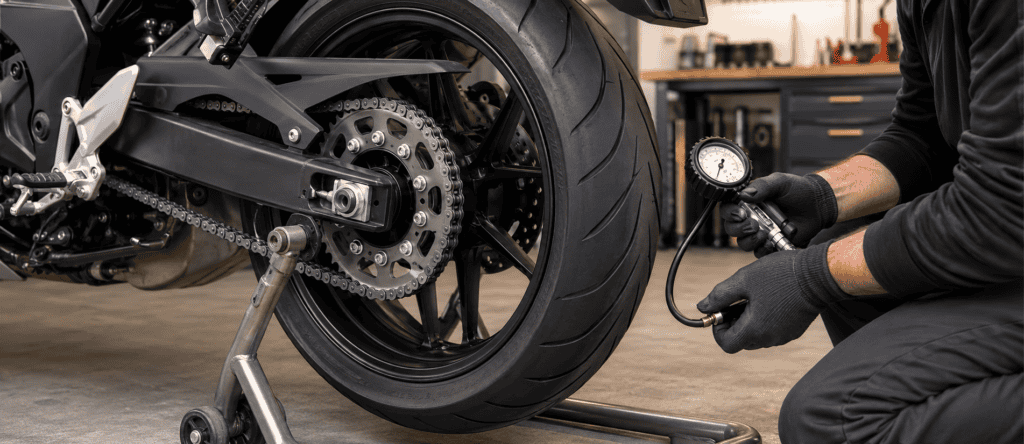
Tyres gradually lose pressure even when the motorcycle is not being used. Before winter storage, inflate them to the cold tyre pressures specified by the motorcycle manufacturer. If you have a centre stand or paddock stands, you can use them to take the weight off one or both wheels during a long period of storage.
Is the motorcycle standing on its tyres? This is usually not a problem. You can move the motorcycle slightly from time to time during winter so that the tyres are not loaded at exactly the same point for several months.
Also check:
- tread depth;
- cracks or other damage;
- the age of the tyres;
- nails or other objects embedded in the tread.
You will then know immediately whether the tyres need replacing before your first spring ride.
4. Maintain the battery
The battery is one of the most common causes of starting problems after winter. A battery slowly discharges when it is not being used. Alarm systems, trackers and onboard electronics may also continue to draw a small amount of power while the motorcycle is parked.
Smart battery charger
If power is available at your storage location, a suitable smart battery charger and maintainer is usually the easiest solution. It keeps the battery charged without continuously charging it at maximum output.
Pay close attention to the battery type. A lithium battery requires a charger that is explicitly designed for lithium batteries.
No power socket available?
You can disconnect the battery or remove it from the motorcycle. Store it in a cool, dry location and occasionally check its voltage during winter. Recharge it whenever necessary according to the battery manufacturer’s instructions.
Start the motorcycle for five minutes occasionally?
It is better not to do this. When a motorcycle only idles briefly, it often does not reach its full operating temperature. This may actually cause condensation to form inside the engine and exhaust system. The energy used to start the motorcycle may not be fully returned to the battery either.
If you ride during winter, take the motorcycle for a proper ride that allows the engine, oil and exhaust system to warm up fully.
5. Prepare the fuel tank
If your motorcycle has a metal fuel tank, it is sensible to fill it with fresh fuel before long-term storage. The less air inside the tank, the lower the risk of condensation forming on its internal surfaces.
Always use fuel that is suitable for your motorcycle. If your motorcycle is compatible with it, E5 may be a sensible choice for longer storage because of its lower ethanol content.
If the motorcycle will remain unused for several months, you can also add a fuel stabiliser. Always follow the product manufacturer’s instructions.
Motorcycles with carburettors
For older motorcycles with carburettors, it may be advisable to drain the float bowls. Check your motorcycle’s owner’s or workshop manual for the correct procedure.
If you use a fuel stabiliser, allow the treated fuel to circulate through the fuel system according to the product instructions before placing the motorcycle into storage.
6. Check the oil and other fluids
Winter storage is a good opportunity to review your motorcycle’s maintenance schedule.
Check the following:
- engine oil;
- coolant;
- brake fluid;
- hydraulic clutch fluid, if applicable.
Engine oil
Is the oil almost due for replacement? It is best to change the engine oil and oil filter before winter storage. This allows the engine to remain filled with fresh oil during winter instead of oil containing accumulated contaminants and combustion residue.
Coolant
Will the motorcycle be stored in an unheated garage or shed where temperatures may fall below freezing?
Check that the coolant provides adequate frost protection. If you are unsure, a workshop can easily check it or you can test it yourself using a suitable antifreeze tester.
7. Protect the motorcycle against moisture and corrosion
An unheated garage or shed can become quite damp during winter. Temperature changes may also cause condensation to form.
You can protect vulnerable metal components with a suitable corrosion-inhibiting product.
Consider treating:
- metal fasteners;
- frame and chrome components;
- exposed aluminium parts;
- other untreated metal surfaces.
Keep lubricants away from the brakes and tyres
Never apply oil, silicone spray or corrosion protection to:
- brake discs;
- brake pads;
- tyres;
- handlebar grips;
- footrests or other surfaces where grip is essential.
8. Choose a suitable storage location
The ideal winter storage location is:
- dry;
- well ventilated;
- protected from rain;
- not excessively humid;
- reasonably stable in temperature.
A heated garage is convenient, but certainly not essential. A dry and well-ventilated shed is perfectly suitable for most motorcycles.
Storing a motorcycle outside
If you do not have a garage or shed, a motorcycle can also be stored outside during winter. Use a durable, breathable motorcycle cover. If possible, park the motorcycle on a paved surface instead of leaving it directly on wet grass or soil for several months.
Check regularly during winter that moisture is not becoming trapped underneath the cover.
9. Use a breathable motorcycle cover
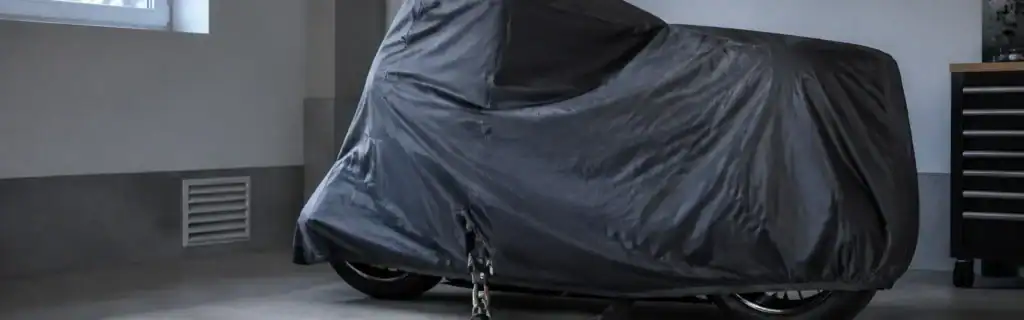
A motorcycle cover can also be useful indoors. Ideally, use a breathable cover that allows moisture to escape. Only place the cover over the motorcycle once it is completely dry and has cooled down.
A cover protects the motorcycle against:
- dust;
- dirt;
- scratches;
- moisture from the surrounding environment.
10. Protect the motorcycle against mice and other pests
Is the motorcycle stored in a garage, shed or storage area where mice may be present? Check it occasionally during winter. To protect accessible openings, use a suitable plug or fine mesh. If you temporarily block the exhaust, always attach a clearly visible reminder to the handlebar or ignition switch so you do not forget to remove it before starting the motorcycle.
Mice can damage:
- wiring;
- insulation materials;
- air filters;
- seats;
- air intakes.
11. Do not forget theft protection
Even a motorcycle stored in a garage for several months can be stolen. Use proper theft protection during winter storage as well. If the motorcycle will not be used for a long time, it is also sensible to keep it out of sight whenever possible.
Consider using:
- the steering lock;
- an ART-certified disc lock;
- a chain lock secured to a fixed object;
- a wall or ground anchor.
Quick checklist: preparing your motorcycle for winter
- Motorcycle washed thoroughly
- Motorcycle allowed to dry completely
- Chain cleaned and lubricated
- Chain tension and sprockets checked
- Tyres inflated to the specified pressures
- Tyres checked for wear and damage
- Battery connected to a suitable battery maintainer or disconnected
- Fuel tank filled with suitable fresh fuel
- Fuel stabiliser added if required
- Engine oil checked or replaced
- Coolant and frost protection checked
- Brake and clutch fluids checked
- Vulnerable metal components protected against corrosion
- Motorcycle stored in a dry and stable position
- Breathable motorcycle cover fitted
- Accessible openings protected against pests
- Theft protection fitted
Ready for the new motorcycle season
Preparing a motorcycle for winter takes some time, but it prevents plenty of unnecessary trouble in spring. When the first beautiful days return, remove the cover and any temporary plugs, then inspect the motorcycle one more time before setting off.
Make sure you check:
- tyre pressures;
- the brakes;
- the chain;
- the lights;
- fluid levels;
- any signs of leaks.
After that, only the best part remains: choosing a great route and getting back on the road.
Also worth reading: your first motorcycle ride after winter
After several months off the road, your motorcycle is not the only thing that needs attention. As a rider, you will also need some time to get used to braking, cornering, observation and cold tyres again.
Take the first ride of the new season slowly and give both yourself and the motorcycle a few miles to settle back into the rhythm.