

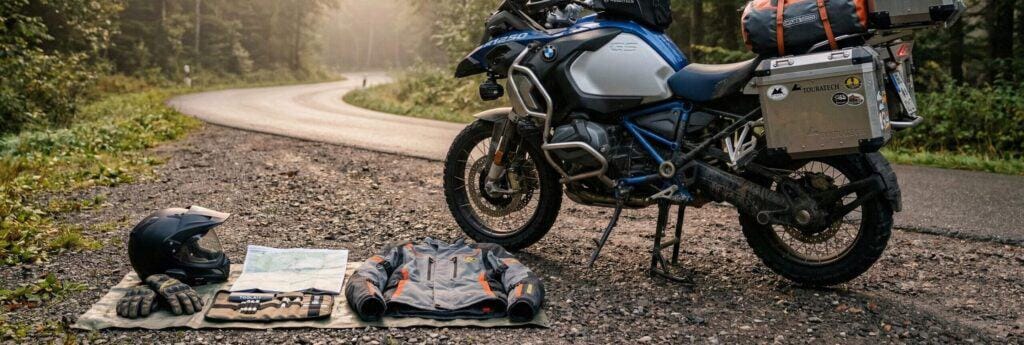
Prepare your motorcycle trip
Motorcycle Trip Preparation: The Complete Guide for a Carefree Ride
A good motorcycle trip does not start only when you turn the key and ride away. What feels relaxed on the road is usually decided well before that. Not by planning every minute or checking every tiny detail, but by making the right choices before you leave. Give your motorcycle a proper look, pack smartly and make sure your…
A good motorcycle trip does not start only when you turn the key and ride away. What feels relaxed on the road is usually decided well before that. Not by planning every minute or checking every tiny detail, but by making the right choices before you leave. Give your motorcycle a proper look, pack smartly and make sure your route more or less makes sense. That is where it really begins.
Many motorcyclists prefer to jump straight into the fun part. Mountain passes, great roads, terraces and viewpoints. That is understandable, because that is what you do it for. But when the basics are right, you enjoy the ride much more. You are not messing around with luggage halfway through the day, stressing about fuel or looking for rain gear that is buried somewhere at the bottom of your bag.
Ready to leave and looking for inspiration for your next motorcycle trip? Take a look at our motorcycle routes in Germany or all our other motorcycle routes. There you will find routes we have ridden ourselves, practical information and GPX files you can use straight away.
Navigate to
Packing list
Generate your checklist
More information
Useful articles & tips
Choose your trip type
Distance, goal & pace
Plan your route
Smart, not too rigid
Motorcycle check
Pre-departure inspection
Pack your luggage
Smart and practical
Gear & rules
Documents, weather & obligations
FAQ
Practical questions
Why Preparation Really Improves Your Motorcycle Trip
Motorcycle riding is all about freedom, but freedom feels much better when the practical side is sorted too. Nothing kills the fun of a ride faster than rushed hassle on the road. An empty tank at the wrong moment, a motorcycle that feels unstable because of poor luggage distribution, or a day route that looked great on paper but turns out to be far too ambitious.
Also check our super handy online Motormakkers tools, which make it easy to check your GPX files.
By ticking off a few things in advance, you simply make life easier for yourself on the road. And you notice that immediately. You ride more relaxed, need to improvise less when things get annoying, and can focus much more on what it is all about: riding.
Step 1: Decide What Kind of Trip You Actually Want to Do

Not every motorcycle trip calls for the same approach. A weekend in the Ardennes is very different from three weeks towards Scandinavia or the Alps. So before you fill your panniers or start building routes, it is smart to pause and think about what kind of ride you actually want.
How long will you be away? For a few days, you can pack fairly minimally. If you are on the road for longer, you automatically start thinking about extra clothing, laundry, spare parts and what you need along the way to stay comfortable.
The type of ride matters too. Do you mainly want to enjoy the bends and cover kilometres? Or are you riding more for the scenery, villages and stops along the way? If you want to attack corners all day, you also need to take the physical side into account. Shorter day distances are often simply smarter.
Then there is the question of whether you ride alone or with others. Riding solo is easy: you decide everything yourself. If you ride with a group, it is wise to make clear agreements in advance about pace, stops, navigation, communication and who rides up front. That prevents a lot of irritation on the road.
If you are looking for a destination that does not require hours of riding to get there, you will find plenty of inspiration in our motorcycle routes in Germany.
No Destination Yet? These Regions Rarely Disappoint
If you are still deciding where to go, there are plenty of destinations that almost always work well on a motorcycle. The Eifel is still one of the best options close to home. You get there relatively quickly, the roads are varied and you immediately feel like you are properly away. If you are planning a route through Germany, do not forget to check which roads are closed to motorcycles in Germany.
Luxembourg is another place where it is hard to go wrong. Especially around Mullerthal, you will find surprisingly good asphalt, enjoyable bends and a landscape that is much more varied than many people expect.
If you really want to head into the mountains, you will quickly end up looking at Switzerland, Austria or Italy. Fantastic riding, but it also requires extra preparation: steeper hairpins, changeable weather and passes that are not always open.
Still deciding between Germany, the Ardennes or Luxembourg as a motorcycle destination? This guide will help you get started quickly.
First Motorcycle Trip? Do Not Plan Too Much Distance
This is where things often go wrong, especially on a first trip. On Google Maps, everything always looks perfectly doable. You see 300 or 350 kilometres and think: that is not too bad. But riding back roads is very different from covering distance on the motorway.
Twisty roads take more time and more energy. You stop more often, take a photo, grab a coffee, refuel, maybe take a wrong turn or come across something you want to look at for a moment. Before you know it, your day is much fuller than you expected.
For a first motorcycle holiday, 150 to 250 kilometres per day on back roads is a much better guideline. Around 200 kilometres is usually a good place to be. That leaves room for breaks, lunch, fuel stops and unexpected things along the way.
If you are experienced, ride at a steady pace and the roads are less technical, 200 to 300+ kilometres can be fine. But for a first trip, that is often simply too ambitious.
That is ultimately much better than getting off the motorcycle at the end of the day completely exhausted.
Step 2: Plan Your Route, but Do Not Lock Everything Down
Preparing a route is smart. Nailing down your entire trip is usually less useful. On a motorcycle, planning too tightly often works against you. The weather can change, a pass can be closed, a road can be under construction or you may simply notice that you are tired earlier than expected.
Make sure your navigation works before you leave, not only at the first roundabout in Germany. Whether you ride with a TomTom Rider, Garmin Zumo XT, Calimoto or Kurviger: test your route, prepare offline maps and check whether your phone or screen gets power on the road.
So leave room in your planning. That does not make you less prepared, but smarter. For route planning and navigation, there are now many useful apps for motorcyclists.
For most motorcyclists, 200 to 300+ kilometres on back roads in a day is perfectly fine. That still leaves time to refuel, drink coffee, take a photo or have lunch somewhere calmly without stepping off the motorcycle completely worn out at the end of the day.

When it comes to navigation, having your setup sorted is now pretty much essential. Whether you ride with a TomTom Rider, Garmin Zumo XT or an app such as Calimoto or Kurviger: make sure you know how it works before you leave. More importantly, prepare your maps offline. In the mountains or remote areas, you will not always have reception. Besides your phone, an external screen on your handlebars can also be a practical solution. In our Navigation & Electronics guide, you can read more about setups like this in practice.
Step 3: Give Your Motorcycle a Serious Check Before You Leave
Nothing ruins a trip faster than a motorcycle that starts complaining halfway through. So however tempting it may be to simply get on and go, check your bike properly before you leave.
A simple inspection often prevents a lot of trouble. Check your tyres, brakes, lights, oil level, coolant and battery. If you have a chain, it should be clean, properly tensioned and lubricated. If you ride with shaft drive, check that everything there is in order too.
With tyres, the rule is basically this: the legal minimum tread depth is nice to know, but for a longer trip you simply want some margin. If your tread is already half gone and you are heading for the mountains, you probably know yourself that it is not a great idea. With lots of luggage or a passenger, you also need to adjust your tyre pressure.
Do not schedule major maintenance at the very last moment either. New tyres, a service or other bigger jobs are ideally planned a week or two earlier. That way you can ride a little, check whether everything feels right and still have some margin if something is not quite correct.
Before you leave, it is also wise to check what your motorcycle must comply with in terms of noise in Germany and Austria.
Step 4: Packing Smart Is More Important Than Taking a Lot

With luggage, many people quickly take too much. Understandable, because you want to be prepared. But an overloaded motorcycle rides less nicely, and you often end up using only half of what you packed.
The basic rule is simple: heavy items low and close to the centre of the motorcycle, lighter items higher up or at the back. So tools, spray and other heavy things go at the bottom of the panniers. Your sleeping bag or extra layers can go on top.
Not sure what to bring? View our motorcycle trip packing list or use the MM packing list tool below. It helps you avoid forgetting anything important, without loading your motorcycle with things you will not use anyway.
Packing List

Paklijst motorvakantie
Stel je paklijst samen
Clothing: Do Not Gamble on the Weather

On a motorcycle, you feel everything directly. Cold, rain, wind, heat. So clothing really makes the difference between comfortable riding and hours of suffering.
The mistake many people make is leaving based on a single weather forecast. Especially if you are heading into the mountains, that makes no sense. You can have perfect weather down in the valley and sit in cold or fog on top of a pass an hour later.
Especially in changeable weather, riding with a layering system is a big advantage. Thermal clothing, a good mid-layer and motorcycle clothing that is flexible enough for different conditions. And rain gear should not be buried at the bottom of a full bag. You want to be able to grab it immediately. Within half a minute. Otherwise you are still standing in the rain pulling half your luggage off the bike, and nobody enjoys that.
Do Not Forget Documents and Rules Either

It is not the most exciting part of a motorcycle trip, but it is something you really should check. Your driving licence, registration card, insurance papers and a European accident statement form are things you simply want to have in order.
It is also smart to check what is mandatory in each country. Think of environmental zones, stickers, a high-visibility vest or a first-aid kit. Rules like that seem small until someone suddenly asks you about them.
Also take a moment to check your roadside assistance. Not every policy is equally comprehensive. Especially if you are travelling farther away, you want to know whether transport of your motorcycle back home is covered if something breaks that cannot be fixed on the spot.
What Is the Best Time to Travel for a Motorcycle Trip?
That depends on where you are going, of course, but roughly speaking, every season has its own advantages and disadvantages.
Spring can already be beautiful. Fresh air, fewer crowds and often lovely riding weather. But in the mountains you still need to be careful. Some passes may still be closed, and even if a road is open, the asphalt can still be cold and treacherous.
Summer is ideal for Scandinavia, the Alps and longer trips. But heat in Southern Europe can be genuinely exhausting. Leaving early is often the smartest choice. And drinking enough is not a luxury; it is simply necessary.
Autumn may be the most beautiful period to ride. Less traffic, great colours and often still pleasant temperatures. But the days get shorter and you are more likely to encounter fog, mud, wet leaves and low sun. So that calls for slightly different preparation too.
More Information
Filters
Actieve filters
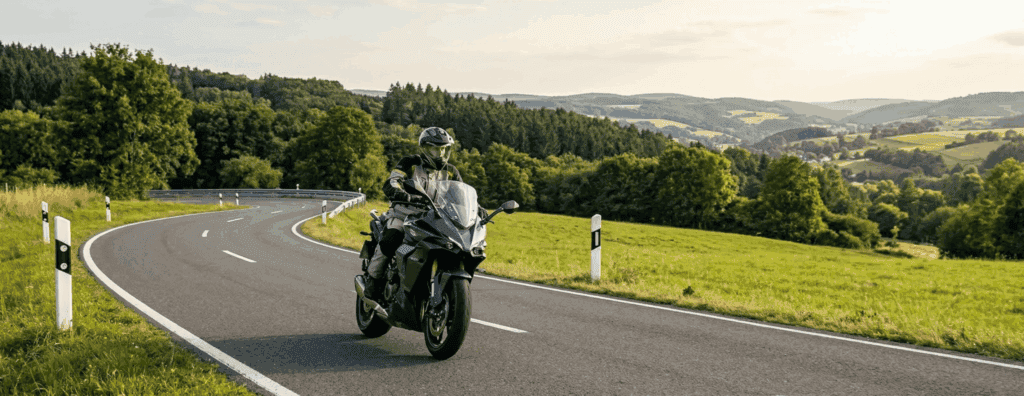
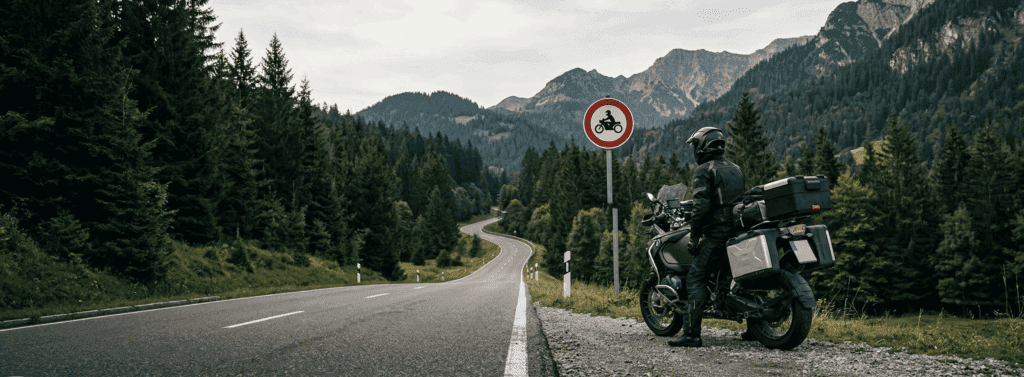

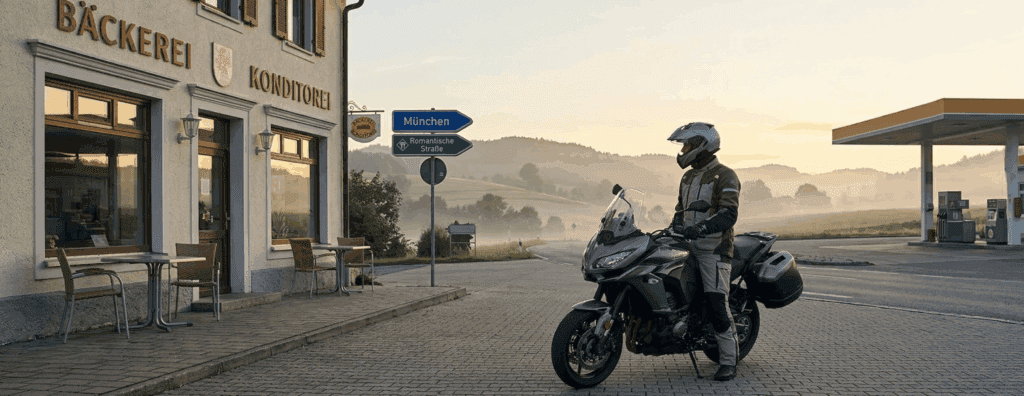
Frequently Asked Questions
How many kilometres is realistic in one day?
That mainly depends on the type of roads. If you mostly need to cover distance on the motorway, you can get much farther. But if you ride back roads or mountain roads, 200 to 300 kilometres is a good, realistic day distance for most people.
Should you book accommodation in advance or not?
In high season or with a larger group, booking in advance is usually simply smarter. If you travel solo or as a pair in the early or late season, you can often plan more loosely and only book something later in the day.
Is a first-aid kit mandatory?
In some countries it is, or it is at least strongly recommended. But regardless of the rules, it is simply wise to always carry one. It takes up little space and can still come in handy on the road.
Conclusion
Preparing a motorcycle trip does not have to be a complicated project. But taking it seriously before you leave does make a difference on the road. If your motorcycle is in order, your luggage is packed logically and your route is realistic, your trip simply starts a lot more relaxed.
So do not plan endlessly, but make sure the basics are right. Then, on the road, you can mainly focus on riding, looking around and occasionally stopping somewhere that feels right.
Have you prepared your motorcycle trip properly and are you looking for inspiration for the next one? View all our motorcycle routes.
Ready to leave
Complete your preparation
Check your route, equipment and luggage before the first kilometres begin.
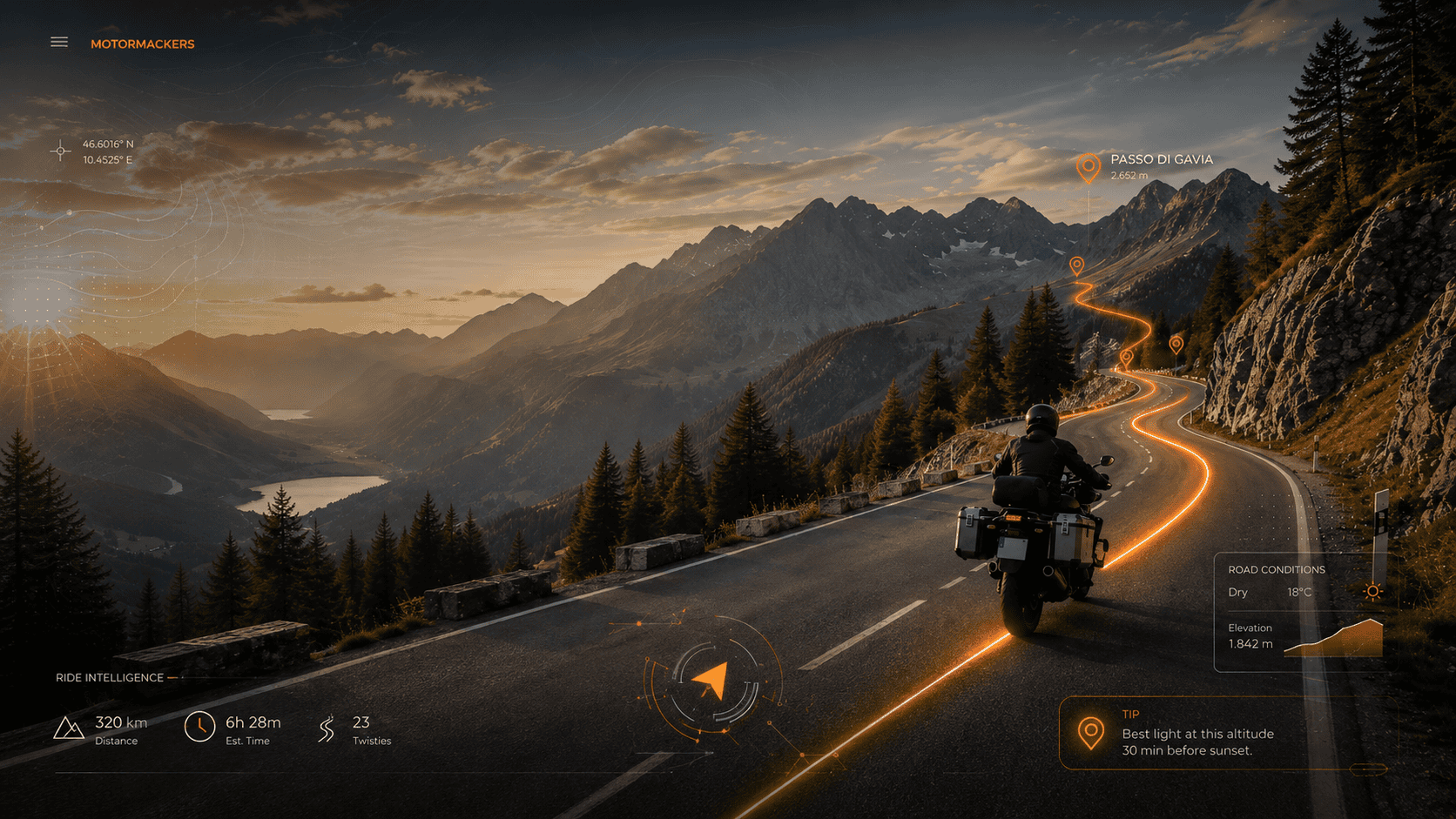
MotorMakkers Start
Your first motorcycle holiday: how to get started well prepared
Planning your first weekend or multi-day motorcycle trip abroad? Here we guide you step by step: from choosing a suitable destination and GPX route to luggage, navigation, accommodation and the final checks before departure.
A motorcycle holiday does not have to be complicated
Your first multi-day motorcycle trip can feel like a bigger undertaking than it really is. How many kilometres should you plan? Which roads are suitable? How does a GPX work? What should you pack and where should you stay? The most important thing is not organising everything perfectly, but making the right choices in the right order.
That is why you will not find an endless checklist here of things you supposedly have to do. MotorMakkers Start helps you keep your first trip manageable: a realistic destination, a good route, solid preparation and enough room to simply enjoy the ride.
Your first motorcycle holiday in 6 steps
Do not start by buying gear. Start with the trip you want to make. Once that is clear, it becomes much easier to see what you actually need.
1
Choose a realistic destination
You do not have to head straight for the Stelvio on your first trip. A region such as the Eifel, Luxembourg or the Sauerland already gives you that real feeling of riding abroad without making the trip unnecessarily demanding.
View beginner destinations2
Choose a route that suits you
Kilometres only tell part of the story. Also look at bends, technical sections, elevation changes, traffic and how much energy the route is likely to require.
View our motorcycle routes3
Make sure your GPX works
Understand the difference between a route and a track, and test before departure whether your Garmin, TomTom or navigation app handles the file the way you expect.
GPX for beginners4
Plan realistic riding days
A twisty 200-kilometre day can be more tiring than hundreds of motorway kilometres. Leave enough margin for coffee, fuel, lunch and an unexpected stop.
Prepare your motorcycle trip5
Pack smart
Do not take everything that might possibly be useful. Start with what you really need for riding, bad weather, documents, breakdowns and overnight stays.
Create your personal packing list6
Check everything shortly before departure
Check the motorcycle, the weather and your route. A GPX created months ago may now run into a road closure, restriction or closed mountain pass.
Check your GPXWhere should you go on your first motorcycle holiday?
The best first destination is not automatically the most spectacular one. Choose an area that is easy to reach, has plenty of good roads and lets you adjust the difficulty without much effort.
Recommended for beginners
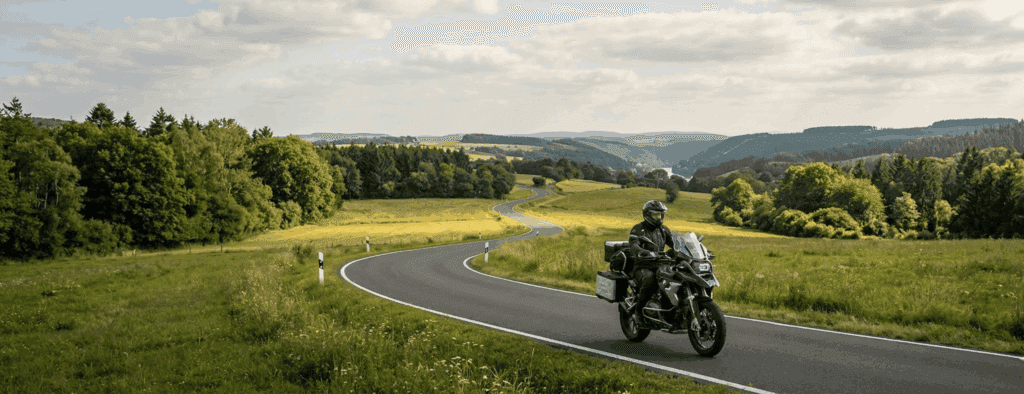
Eifel
Close to the Netherlands, with plenty of good roads and enough variety without having to tackle extremely technical mountain roads straight away. For many riders, this is the most logical first step across the border.
- Ideal for 2–3 days
- Plenty of flowing bends
- Wide choice of hotels
- Easy to reach from the Netherlands

Compact & manageable
Luxembourg
Compact, varied and well suited to a first short trip abroad. Routes are easy to shorten, but make sure you know the local traffic rules and have the required documents and equipment with you.
- Short distances
- Plenty of scenic back roads
- Routes are easy to shorten
- Be aware of local rules and checks
Next step
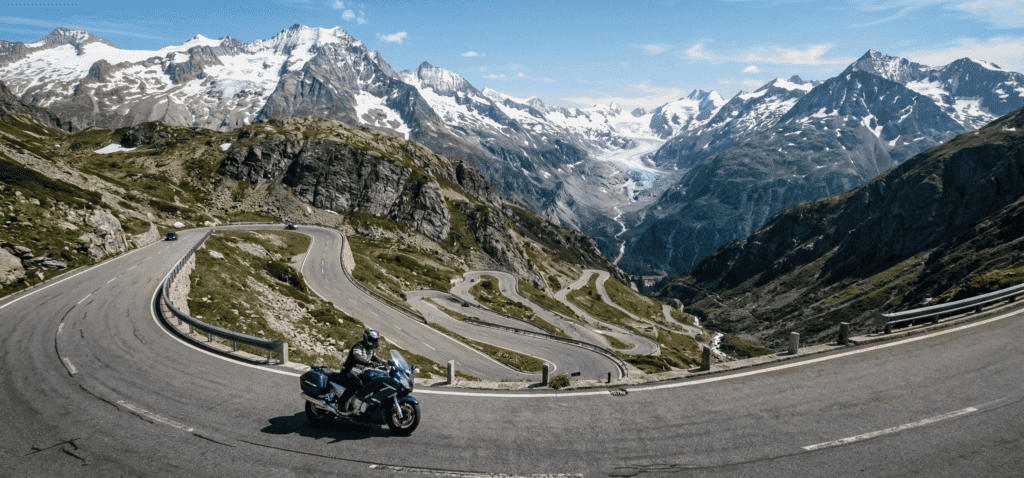
The Alps
Ready for real mountain passes? Do not automatically start with the most famous or most difficult pass. Choose an accessible first pass and gradually build up the technical difficulty.
- More elevation change
- More hairpin bends
- Weather has a bigger impact
- More preparation required
MotorMakkers Rookie Route
Not every great route is a good first route
With our Rookie Routes, we select routes that are enjoyable enough to feel like a proper motorcycle trip, but manageable enough for less experienced touring riders to enjoy at a relaxed pace.
We do not just look at distance, but also at technical sections, hairpins, road type, busy towns, rest stops and the practical feasibility of the entire day.
What we look for in a Rookie Route
Day distanceManageable
Technical difficultyLow / medium
BendsPlenty
Extremely narrow roadsLimited
Rest & fuel optionsGood
GPXTested
GPX and navigation: understand what you are loading
Downloading a GPX file is easy. Making sure your navigation system does exactly what you expect on the road takes a little more attention.
GPX for beginners: how it works
Learn the difference between routes, tracks and waypoints, and discover why the same GPX can behave differently on different navigation systems.
GPX for beginners: how it worksWhat will your route feel like to ride?
MM FlowIndex gives you a better idea in advance of the bends, flow, elevation and technical characteristics of a GPX route.
Analyse with FlowIndexAre there restrictions on your route?
Check whether your GPX runs into known road closures, motorcycle restrictions, dB limits or closed mountain passes.
Open Route CheckerPlanning an Alpine ride?
Compare mountain passes by elevation, hairpins, gradient, riding character and current status before adding them to your trip.
Compare Alpine passesPrepare for your trip without packing half your house

Good preparation is not about taking as much as possible. It is about having the most important things sorted so you do not have to improvise unnecessarily while travelling.
Motorcycle and maintenance
Check tyres, tyre pressure, chain, brakes, lights, fluids and whether scheduled maintenance is likely to fall right in the middle of your trip.
Luggage
Pack heavy items low and centrally. Keep rain gear, documents and items you use on the road easy to reach.
Documents & breakdowns
Make sure insurance details, breakdown cover, driving licence, vehicle documents and important phone numbers are also available offline.
Accommodation
For your first multi-day trip, booking ahead often makes things more relaxed. Also look for secure motorcycle parking and consider how well the accommodation is positioned for your planned routes.
The final check
Ready to go?
Run through these points once more in the final days before departure. Then, on the morning itself, all that is left to do is start the bike.
GPX downloaded and tested
Navigation and offline maps work
Route checked for restrictions
Weather forecast checked
Accommodation arranged
Motorcycle mechanically checked
Tyres and tyre pressure are good
Insurance and breakdown cover understood
Documents packed
Packing list completed
First motorcycle holiday?
Going on your first motorcycle holiday? Start here
From day distances and route planning to luggage, documents, motorcycle checks and accommodation. In our complete preparation guide, we take you step by step through what you should arrange before departure.
Day distances
Route planning
Luggage
Motorcycle check
Accommodation
Go to the complete preparation guide
Frequently asked questions
First motorcycle holiday: practical questions
How many kilometres should I plan for my first motorcycle holiday?
That depends heavily on the type of roads. For a day with lots of smaller roads, around 150 to 250 kilometres is a comfortable range for many riders. Leave some margin rather than trying to hit a strict kilometre target every day.
What is a good destination for my first motorcycle weekend?
The Eifel and Luxembourg are strong choices because they are relatively close, offer plenty of good roads and make it easy to adapt the route to your own pace and experience.
Should I book my hotels in advance?
For a first trip, that can provide a lot of peace of mind. You know where your day will end and do not have to search for suitable accommodation after a long ride.
Are the Alps suitable for a first motorcycle holiday?
They certainly can be, but choose your routes carefully. Not every Alpine pass is equally accessible. Start with manageable roads, keep your riding days shorter and do not underestimate elevation, weather and fatigue. View the Alps for beginners.
How do I know whether a GPX route is too difficult?
Look beyond distance alone. The number of bends, hairpins, elevation changes, road type and technical sections tell you much more about how demanding a route is likely to be. The MM FlowIndex can help you assess this.
Now you only need to choose where to go
Start small, choose a route that suits you and make sure the practical basics are sorted. You will learn the rest along the way. And chances are that after your first weekend, you will already be planning the next one.